By St. Ginth Haokip
Kukiland Express Desk
Aizawl: May 1, 2026
Aizawl witnessed a landmark moment for peace in the Northeast on Thursday as Mizoram formally declared itself “insurgency-free” following the surrender of the last active militant outfit in the state. The Hmar People’s Convention (Democratic), led by Sanate, laid down arms at a homecoming ceremony in Sesawng near Aizawl, drawing the curtain on decades of armed insurgency. With 43 cadres handing over their weapons, the Sanate faction — long considered the final underground group operating in Mizoram — officially entered the mainstream. The event marks the closure of a turbulent chapter that began in the late 1980s, rooted in demands for an Autonomous District Council under the Sixth Schedule for the Hmar community.
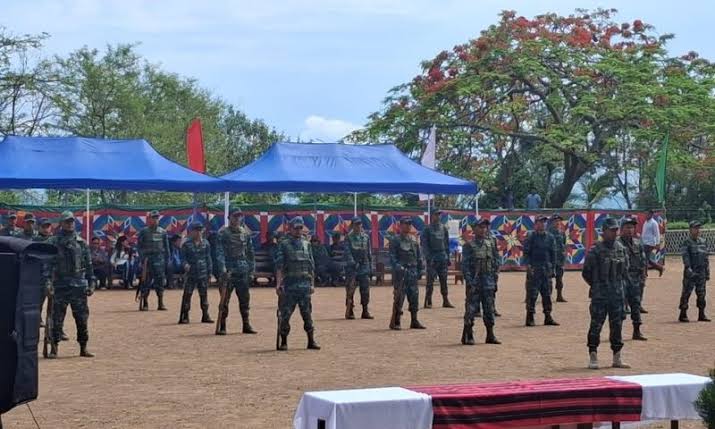
Chief Minister Lalduhoma, who presided over the arms-laying ceremony, described the surrender as a “milestone in Mizoram’s history” and affirmed that no armed insurgent groups remain active in the state. Addressing the gathering, he invoked a unifying Mizo identity, stating, “We are all Mizos… we will thrive only through unity,” and called on communities to move beyond sub-tribal divides. Drawing from his own past, Lalduhoma recalled resigning from the Indian Police Service to aid peace efforts during the Mizo National Front insurgency, noting that “the price of peace is high.” He commended the courage of the surrendering cadres, adding that “only the truly courageous have the strength to lay down arms for the greater good.”
The surrender follows a peace accord signed on April 14 between the Mizoram government and the HPC(D), ending the Sanate faction’s armed resistance. While major factions of the Hmar movement had joined the mainstream through agreements in 1994 and 2018, Sanate’s group continued to operate until now, making this disbandment decisive. The Hmar insurgency emerged from long-standing political and cultural demands, but successive peace processes have gradually dismantled its armed structure. Thursday’s ceremony, attended by officials, civil society leaders, and families of the cadres, was framed not as a defeat but as a homecoming — a return to democratic and constitutional methods of addressing grievances.
With the last guns silenced, Mizoram now stands at the threshold of a new era focused on stability, development, and reconciliation. The state’s journey from the violent MNF uprising of the 1960s to today’s insurgency-free status reflects a sustained political will for dialogue over conflict. The surrender of the HPC(D) removes the final obstacle to consolidating peace across the hill state, allowing the government to redirect resources from security to social and economic growth. As Lalduhoma emphasized, the challenge ahead lies in building an inclusive Mizo society where past divisions give way to shared progress. For the Northeast, Mizoram’s closure of armed insurgency sets a precedent — that even protracted conflicts can end when negotiation replaces the gun.