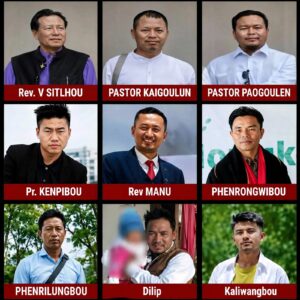
When three innocent pastors were ambushed and killed on May 13, the cycle of vengeance began. To demand justice for the six Naga men killed weeks later as retaliation, while staying silent on the original murder of the pastors by NSCN-IM and ZUF-K, is selective morality. True justice must begin where it was first denied.
Justice, by its very definition, must be blind and impartial. It cannot be tribalized to serve the interests of one group, it cannot be made conditional upon who the victim is, and it cannot be claimed as a monopoly by one community while being systematically denied to another. This is not just a legal principle, it is a moral law that governs any civilized society. This is the fundamental principle that must be applied without exception to the current loud demand for justice for the six Nagas killed. When justice is filtered through the lens of tribe and bloodline, it ceases to be justice and becomes nothing more than revenge politics dressed up in legal language.
The Facts the World Must Not Forget: Dates and Places
The first blood in this latest and most painful chapter was shed on May 13, 2026. On that Wednesday morning, in a shocking and premeditated ambush, three prominent Kuki pastors, Reverend V. Sitlhou, Reverend Kaigoulun Lhouvum and Pastor Paogoulen Sitlhou, were waylaid and shot dead between Kotjim and Kotlen in Kangpokpi district. They were travelling in two vehicles from Churachandpur to Kangpokpi to attend a Church and Mission Convention, an inter-association ecclesiastical gathering of church leaders. They were on a spiritual mission to serve their churches, completely unarmed and non-political. In that same ambush, four others, including fellow clergy and their driver, were grievously injured and left to die on the roadside, a brutal act that shocked the entire Christian community.
As Christians, Kuki and Naga Must Stop Spreading Hatred and Fake Propaganda Against Each Other
This horrific killing immediately triggered the entire hostage crisis that engulfed the region and brought two communities to the brink of open conflict. On the very same day, May 13, 2026, in Leilon Vaiphei village in the same Kangpokpi district, several Naga civilians were abducted by armed Kuki groups in a direct reaction to the news of the pastors murder. The six Naga men, residents of Konsakhul Naga village, remained missing and their families remained in agonizing uncertainty for twenty eight days until their decomposed and mutilated bodies were finally recovered on June 10 and 11, 2026 by a massive joint search operation involving around 450 personnel of the Manipur Police, CRPF and Assam Rifles assisted by sniffer dogs and forensic experts. The Kuki Council itself later admitted in a press conference that members of their community executed the six, calling it a grave mistake committed during an outburst of emotion.
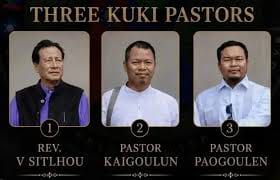
File Photo: The three Kuki pastors – Rev. V. Sitlhou, Pastor Kaigoulun Lhouvum and Pastor Paogoulen Sitlhou – who were ambushed and killed between Kotjim and Kotlen in Kangpokpi on May 13, 2026, while travelling to a Church Convention.
The Hard Truth: The Second Killing Was Retaliation for the First
Let the people of Manipur and the people of India be told the truth in its proper chronological order without any distortion. The killing of the six Naga men was not an isolated and unprovoked incident that happened in a vacuum. It was the direct, immediate and admitted retaliation for the cold-blooded murder of the three Kuki pastors.
The chain of events is clear, documented and undeniable even by the apex body of the Kuki community. The pastors were killed while going for a holy Church Convention in the morning, and just hours later in the afternoon, the hostage-taking began in Leilon Vaiphei as an immediate retaliatory outburst from an angry, wounded and grieving community that had just seen its spiritual leaders massacred. The subsequent abduction and tragic execution of the six Naga men was the direct and unavoidable fallout of that first attack on men of the cloth who had dedicated their lives to peace.
Therefore, if you want justice for the retaliation, you must first have the moral courage to give justice for the original provocation. You cannot condemn the retaliation with full force while glorifying or maintaining a criminal silence on the crime that caused it. That is hypocrisy. Justice for the six Naga men will only come and will only be meaningful when justice for the three Kuki pastors is delivered first.
The Same Standard Must Apply to Both
If the Naga community wants the entire nation, the media, and the state administration to hear its cry for justice for six Nagas killed by Kuki armed groups, then that same moral standard, that same urgency, and that same vocabulary of condemnation must first be applied to the three innocent Kuki pastors who were brutally killed by Naga militants of NSCN-IM and ZUF-K. You cannot invoke universal human rights for your own people and then retreat into tribal silence when your own people are accused of committing the same crime. A demand for justice is only legitimate when the one demanding it is willing to be held to the same law. You cannot ask for tears for your dead while your hands are silent about the blood on your own side. Grief is not a competition, but accountability must be equal. When a community demands that the whole world mourn with them, it must first show that it is capable of mourning with others. To weep only for your own and remain stone-faced for the victims killed by your own is not grief, it is politics.
The Victims Were Men of Peace, Not War
The three Kuki pastors were not militants and they were not armed cadres operating in the jungles. They were men of God, men of peace, shepherds of their congregations whose only weapons were the Bible and prayer. Their only crime was their identity as Kukis and their presence on a road that they believed was safe. Their murder was therefore not just a murder, it was a direct attack on the Christian faith itself, an attack on humanity and an attack on the very idea of coexistence in a multi-ethnic Manipur. Yet where was the outrage then. Where were the shutdowns, where were the mass protest rallies in Imphal, where were the memorandums to the Governor, and where were the cries for justice when their bullet-riddled bodies were laid to rest by their weeping families.
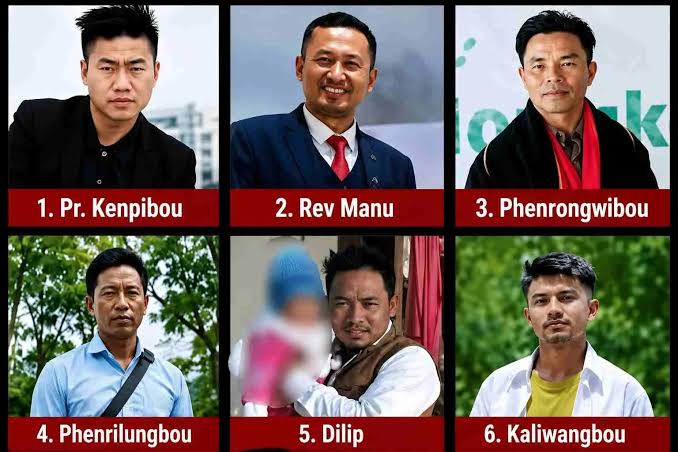
File Photo: The six Manipur Naga men – Pr. Kenpibou, Rev. Manu, Phenrongwibou, Phenrilungbou, Dilip (holding infant) and Kaliwangbou – who were killed on June 3, 2026, in Kangpokpi district.
Selective Outrage is Political Convenience
To demand justice now while deliberately ignoring and whitewashing that past crime is not a pursuit of justice at all, it is the pursuit of political convenience and selective victimhood. It sends a dangerous message that some lives are worthy of justice and some lives can be killed and forgotten. This selective morality is what has destroyed the social fabric of Manipur and it cannot be allowed to become the new norm.
True Justice Means Accountability for All
True justice means accountability for all, without fear or favour. It means that the murder of six Nagas is indeed a tragedy that must be investigated, the killers must be identified, and they must be punished according to the law of the land, but the murder of three Kuki pastors is an equally grave tragedy that must be punished first, because it happened first, it started the cycle of vengeance, and it has been deliberately denied and brushed under the carpet for too long.
You Cannot Build Justice on Denied Justice
You cannot build a legitimate claim for justice on a foundation of denied justice. The house will not stand. If the Naga leadership, including its civil society organizations and church bodies, is sincere about justice and wants to be taken seriously by the rest of India, let them lead by example. Let them publicly condemn the killing of the three Kuki pastors, let them demand the immediate arrest of the NSCN-IM and ZUF-K killers responsible, and let them stand with the Kuki community in their grief as fellow Christians and fellow human beings.
Until the blood of the three pastors gets justice, any demand for justice for the six rings hollow and will be seen for what it is. Let justice begin where it was first denied, because justice delayed for the pastors is justice denied for everyone.