Working Committee cites intimidation of Kuki villages, border crimes in Namlee, Wanglee, Choro; says population fell from 49.7% to 5% since 1947
Edited by Kimbawinu Vaiphei, Kukiland Express Desk
Songpi: May 21, 2026
The Kuki CSO Working Committee, Ukhrul has accused COCOMI and IPFM of running “coordinated propaganda” in Namlee, Wanglee, and Choro, alleging that recent visits by the two organisations were meant to intimidate Kuki villages and erase the community’s historical presence in Ukhrul and Kamjong districts.
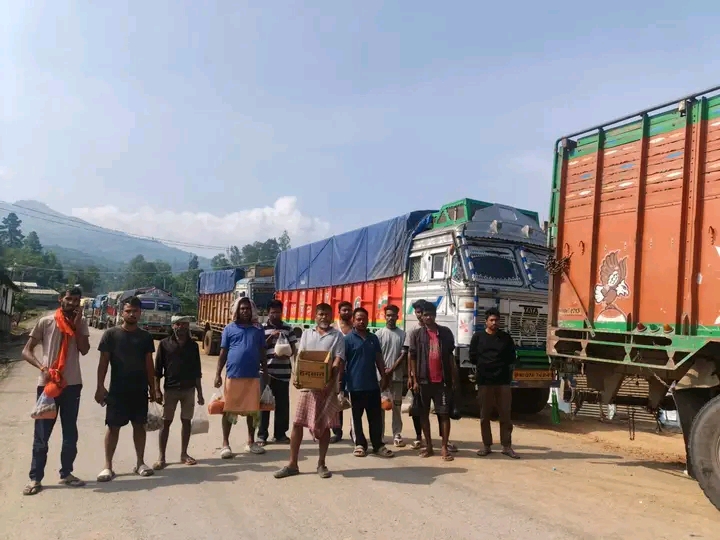
In a press release dated May 17, 2026, the Committee said the groups operated under the “guise of peace and indigenous solidarity” while deepening ethnic divisions. It stated that organisations with a “consistent record of anti-Kuki rhetoric cannot claim the mantle of peace” and described COCOMI as an overground platform amplifying narratives linked to CorCom-affiliated Meitei secessionist groups.
The Committee warned the wider Naga public and civil society against attempts by certain Tangkhul groups to project a localised Tangkhul-Kuki issue as a broader pan-Naga conflict. It said such “deliberate communalisation” would destabilise inter-community relations and endanger peace among tribal communities.
On IPFM, the Committee alleged the platform has been misused by individuals such as Ashang Kasar to carry out anti-Kuki propaganda. It recalled that Ashang Kasar was accused of forging the signature of Rohan Philem, an act later publicly called out by Rohan Philem himself. The Committee said the incident shows how the organisations “thrive on misinformation and communal hatred.”
The statement highlighted demographic shifts in Ukhrul, claiming the Kuki population stood at approximately 49.7% in 1947 but dropped to around 5% by 2011. The Committee linked the decline to decades of intimidation, displacement, marginalisation, and systematic exclusion, adding that branding Kukis as “foreigners” destroys the foundation of coexistence in Manipur.
It further noted that the Manipur Home Minister recently clarified that incidents in Namlee, Wanglee, and Choro were not acts of external aggression. Despite this, the Committee said COCOMI and IPFM continue spreading narratives that contradict official findings, inflaming tensions further.
On security, the Committee described Namlee, Wanglee, and Choro as sensitive corridors associated with illegal timber smuggling, cross-border drug trafficking, militant movement, and activities of armed groups exploiting the porous international border. It urged the Government of India to expedite comprehensive border fencing and strengthen surveillance to curb illegal infiltration, narco-terrorism, arms movement, and cross-border militancy.
The Kuki CSO Working Committee asked the Centre, MHA, NIA, and the state government to initiate legal action against organisations and individuals spreading hatred, provoking ethnic unrest, and threatening communal harmony. “The Kuki people desire peace, coexistence, and justice. However, peace cannot prevail so long as targeted hate campaigns, intimidation, and communal propaganda against minority communities continue to be normalised and protected,” the statement said.
Disclaimer: The views, allegations, and demographic data presented in this article are explicitly those of the Kuki CSO Working Committee, Ukhrul, as stated in their press release dated May 17, 2026. They do not necessarily reflect the official stance or verified data of this publication.