
Songpi: April 15, 2026
China has thrown its weight behind Iran and cautioned the United States against external interference after Washington announced a naval blockade targeting maritime traffic linked to Iranian ports. The move has intensified geopolitical friction in the Middle East, with early maritime data already indicating a slowdown in vessel movement through the strategic Strait of Hormuz, a chokepoint for nearly a fifth of global oil shipments.
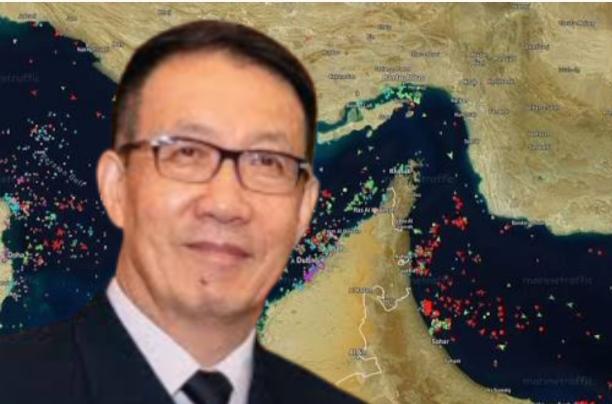
Speaking on the developments, Chinese Defence Minister Dong Jun said Beijing is closely monitoring the situation and remains committed to global peace and stability. He confirmed that Chinese commercial vessels are continuing to transit the Strait of Hormuz, underscoring China’s deep economic and energy ties with Tehran. The minister’s remarks signaled that Beijing does not intend to alter its shipping or trade patterns despite the US announcement.
“Our ships are moving in and out of the waters of the Strait of Hormuz. We have trade and energy agreements with Iran. We will respect and honour them and expect others not to meddle in our affairs,” Dong said in a statement on Monday. He added that Iran controls the Strait of Hormuz and that the waterway remains open for Chinese vessels, directly challenging the premise of Washington’s enforcement action.
The Chinese statement followed a declaration by the United States Central Command that it would begin enforcing a blockade on all maritime traffic entering or exiting Iranian ports starting 10 a.m. ET on April 13, or 7:30 p.m. IST. The order, issued under presidential directive, marks a significant escalation after ceasefire discussions between the US and Iran collapsed during talks held in Pakistan. CENTCOM said the blockade is now in effect across Iranian ports and coastal areas.
According to details released by CENTCOM, the blockade applies to vessels of all nationalities operating in Iranian ports, including those along the Arabian Gulf and the Gulf of Oman. However, the US military clarified that it will permit free navigation for ships transiting the Strait of Hormuz provided they are traveling to or from non-Iranian ports. The distinction appears aimed at isolating Iran economically while attempting to avoid a complete closure of the strait to global shipping.
To manage the enforcement, the US military said it will issue further operational guidance to commercial shipping through official maritime notices. Mariners operating in the region have been advised to monitor formal broadcasts and maintain open communication channels with US naval forces. The guidance is intended to prevent accidental confrontations in a waterway already crowded with tankers, cargo ships, and military vessels from multiple nations.
The backdrop to the blockade is the breakdown of recent US-Iran ceasefire negotiations, which failed to produce an agreement on de-escalation. With diplomatic channels stalled, Washington has shifted to economic and military pressure, focusing on Iran’s oil exports as leverage. Preliminary shipping analytics show a measurable dip in vessel transits through the Strait of Hormuz since the announcement, suggesting that some operators are rerouting or delaying voyages amid uncertainty.
The potential economic fallout is substantial, particularly for energy markets. China is the largest buyer of Iranian crude oil, with long-term contracts that underpin a significant portion of Tehran’s export revenue. Any sustained disruption to tanker traffic from Iranian terminals would directly impact both Iranian state finances and Chinese energy security, raising the stakes for Beijing’s response. Analysts note that China’s public defense of its shipping rights is also a defense of its energy supply lines.
For now, Beijing’s position sets up a direct test of wills in one of the world’s most sensitive maritime corridors. By affirming that its ships will continue to use the Strait of Hormuz and honor trade deals with Iran, China has signaled it will not comply with the US blockade where its interests are involved. With US forces beginning enforcement and Chinese vessels maintaining operations, the region faces a period of heightened risk as commercial and military traffic intersect under competing mandates.
Edited By: Elvish Haokip
Copyright ©2026 Kukiland Express