The ongoing debate over nomenclature and identity in the region has created confusion both within the community and in official discourse. According to the Indian and Manipur governments, Zomis are considered illegal immigrants or refugees who entered India from Myanmar during or after the 1990s. This classification carries serious implications for citizenship, land rights, and political representation, and it underscores the urgent need to distinguish historical identities from recent political constructs.
The term “Zo” originated from the Mizo tribe in Mizoram. It does not include the Kukis of India, the Chins of Myanmar, or the Bawms of the Chittagong Hill Tracts in Bangladesh. In fact, there are no historical records or government documents that acknowledge the term “Zo” as an umbrella identity. As a derivative of Mizo, the term “Zo” should be confined to Mizoram state politics only.
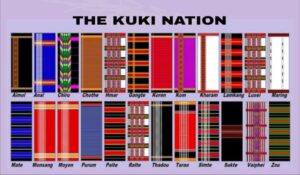
The name Kuki was not given by British or Bengali writers. The Kukis had already settled in Northeast India, Western Myanmar, and the Chittagong Hill Tracts of Bangladesh in the 6th–7th century, long before the British arrived in India, Bangladesh, and Burma (now Myanmar).
In the 17th century, the British recognized the tribal communities living in northwest Myanmar, northeast India, and the Chittagong Hill Tracts of Bangladesh as Kukis. The United Nations (UN) has also recognized the name “Kuki”, and the 1904 British map of Kuki country stands as evidence.
History cannot be changed. History cannot be altered at one’s wish. The unrecognised new nomenclature has no political rights, has no land rights, and is not recognised by governments or the UN. Therefore, whether you like it or not, we are all Kukis.