Introduction: The Constitutional Distinction Between Recognised Tribes and Unrecognised Nomenclatures:
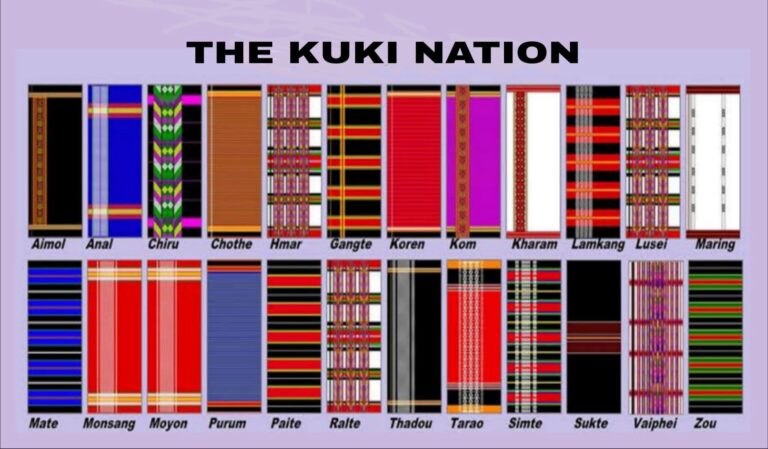
India’s democratic framework permits communities to seek administrative safeguards, but any such claim must be anchored in constitutional recognition and citizenship. The distinction is therefore legal, not political: it separates communities recognised by the Indian state from nomenclatures that have no standing in law. The term Zo is derived from Mizo, and the Mizo community already constitutes the state of Mizoram within the Union of India. Zomi is widely used to denote illegal immigrants from Myanmar who possess no Indian citizenship or legal status under the Citizenship Act, 1955. The Kuki, by contrast, are a Scheduled Tribe listed in the Constitution (Scheduled Tribes) Order, 1950, with a long-documented presence in the hill areas of Manipur. Because the Constitution confers rights and protections only upon citizens and legally defined communities, the validity of any demand for territorial reorganisation must be judged against these distinctions. The persistent demands for a separate district, Union Territory, or state in the name of Zo and Zomi thus raise a question of law before politics.
Why Demands in the Name of Zo and Zomi Lack Constitutional Basis:
The Constitution provides an explicit framework for equality and recognition that applies to citizens and to communities defined by law. Article 14 guarantees equality before the law, and Article 15 prohibits discrimination on grounds of religion, race, caste, sex, or place of birth. Zo is not notified as a separate Scheduled Tribe, Scheduled Caste, or any other constitutionally recognised community by the Government of India; it remains a linguistic and cultural derivative of Mizo, which already enjoys statehood. To seek a new state or Union Territory on the basis of a derivative term lacking independent legal status is to demand constitutional recognition for an identity that the law does not define — a proposition without precedent in the constitutional scheme. Zomi raises a graver legal infirmity, as the term is associated with illegal immigrants from Myanmar who entered India without valid documentation. Granting territorial and political rights to foreign nationals would contravene the Foreigners Act, 1946, and offend the basic structure of the Constitution. Such demands undermine the principles of equality, justice, and territorial integrity upon which the Republic rests.
Citizenship and Tribal Recognition Are Determined by Statute, Not Self-Declaration:
Citizenship and tribal status in India are conferred by statute and presidential orders, not by self-declaration. The Citizenship Act, 1955 defines Indian citizenship by birth, descent, registration, or naturalisation and excludes illegal migrants from acquiring citizenship through mere entry. The Constitution (Scheduled Tribes) Order, 1950 specifies the tribes recognised in each state, and the Kuki are expressly listed as a Scheduled Tribe in Manipur. That recognition extends to the Kuki the protections of Articles 244(1), 244(2), and the Fifth and Sixth Schedules, which were enacted to safeguard tribal land, identity, and self-governance. Advancing territorial demands in the name of Zo, a term without separate legal recognition, or Zomi, a term linked to illegal immigrants, conflates citizens with non-citizens and dilutes the sanctity of constitutional recognition. Indian law does not permit undefined identities or foreign nationals to be placed on par with Scheduled Tribes.
Unrecognised Claims Threaten National Integration; Constitutional Mechanisms Provide the Lawful Path:
Demands for administrative units based on unrecognised nomenclatures or for non-citizens endanger national integration and internal security. They incentivise illegal migration, encourage the invention of new group identities to claim territory, and establish a precedent that could fragment the Union by allowing any label to become the basis for a district or state. The violent contestation over land and resources in Manipur since May 2023 illustrates the social cost of such ambiguity. The constitutional way forward is well established: the Government of India has historically employed state reorganisation and autonomous councils to address the aspirations of recognised Scheduled Tribes, thereby strengthening the federal structure. Those mechanisms should be applied where legal status and historical habitation exist. Concurrently, immigration laws must be enforced, and the meaning of “indigenous” must not be stretched to include recent illegal entrants. Equal opportunity and dignity must be guaranteed to all constitutionally recognised communities, while demands advanced in the name of unrecognised terms or for non-citizens must be rejected.
The Constitutional Grounds for a Kuki State or Union Territory:
The Kuki demand for a separate state or Union Territory is founded on three constitutional grounds that do not apply to Zo or Zomi. First, the Kuki are full citizens and a Scheduled Tribe, which renders them eligible for the protective discrimination and self-governance frameworks the Constitution envisages. Second, they occupy a compact, contiguous hill territory with distinct administrative and landholding systems that have collapsed under the present state structure, particularly after the complete breakdown of trust following May 2023. Third, the Indian Union has a consistent record of granting statehood or Union Territory status to distinct tribal communities to ensure their security and development, as demonstrated by Nagaland, Mizoram, Arunachal Pradesh, and Meghalaya. The Kuki demand is therefore a call for reorganisation within the Union, not secession, invoking the same constitutional instruments that have preserved India’s unity in diversity. When an existing framework fails to protect the life, property, and political representation of a recognised tribe, the Constitution permits structural correction.
Conclusion: Upholding Legal Distinctions to Preserve Constitutional Order:
The distinction between the legal status of the Kuki and the claims made in the name of Zo and Zomi is constitutional, not ethnic. Zo has no separate legal recognition and derives from Mizo, which already has Mizoram. Zomi denotes illegal immigrants from Myanmar with no citizenship or territorial rights under Indian law. Demands for a district, UT, or state in either name are legally untenable and inimical to national integration and immigration enforcement. The Kuki are a constitutionally recognised Scheduled Tribe and Indian citizens. The Government of India must enforce the law against illegal immigration and unrecognised nomenclatures, while addressing constitutional claims through lawful dialogue and reorganisation. Only this distinction will restore stability, uphold equality before the law, and preserve the constitutional order.