For two survivors, release from 27 days of captivity marks the start of a harder battle with trauma and fear
By Nengcha Haokip – Kukilamd Express Desk
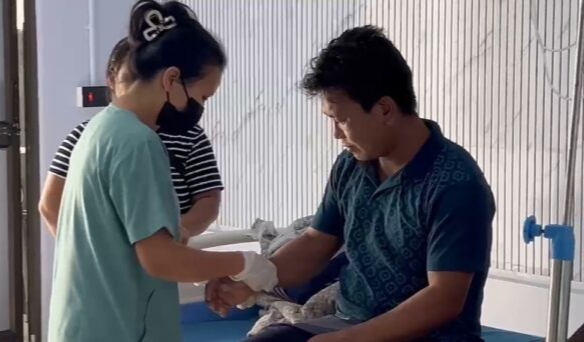
Kanggui, June 13, 2026: The release of 14 Kuki hostages on June 9 after 27 days of captivity was welcomed across Manipur as a rare humanitarian breakthrough. Yet for families in Kangpokpi district, freedom has not brought relief. At least two of the freed men are now confronting a different ordeal — the psychological and physical aftermath of weeks in confinement. A day after their return, Thangtinlen Chongloi, 34, of Taphou Kuki Village, and Haominlun Kipgen, 27, of Hengbung Village, were admitted to Kangpokpi District Hospital on June 10 with acute trauma-related symptoms, including severe anxiety, insomnia, and signs of Post-Traumatic Stress Disorder. Both were later referred to Emmanuel Multi Speciality Hospital, Keithelmanbi, for specialized care.
Families describe the men as “changed beyond recognition.” Thangtinlen’s wife, Kimneithem Chongloi, said her husband returned withdrawn and fearful. “He was not the same person who left home. He hardly spoke, barely ate. At night he would jolt awake, panicked, saying someone was opening the door. We had no choice but to take him to hospital,” she recounted. Haominlun’s sister, Thethem, echoed the distress. “He’s always been active, talkative, full of jokes. But he came back silent. He would sit quietly for hours, then suddenly look terrified. He can’t sleep,” she said. Their accounts reveal a shared reality: the captivity ended, but the trauma followed them home.
Medical records confirm the severity of their condition. Doctors diagnosed Thangtinlen with Mild PTSD, compounded by severe lethargy, persistent fatigue, and insomnia. He was placed on anti-anxiety medication and treatment to stabilize his mental state. Haominlun’s case showed similar PTSD symptoms, alongside complaints of numbness in his lower limbs, prompting doctors to order spinal imaging and neurological tests. Both men were treated for elevated blood pressure linked to acute stress. While Thangtinlen was discharged on June 12 with strict follow-up instructions, Haominlun remains under medical care as of Thursday.
Health experts say their symptoms reflect the hidden aftermath of hostage situations. PTSD can emerge after prolonged exposure to life-threatening fear, confinement, or violence, and often manifests as hypervigilance, recurring distress, emotional instability, and sleep disruption. “Physical release does not equal recovery,” one clinician in Kangpokpi noted. “The mind remains captive long after the body is free.” For communities in the hill districts, the hospitalization of the two men has shown that the humanitarian crisis triggered by the captivity has shifted from negotiations and rescue to long-term healing.
The ordeal of Chongloi and Kipgen underscores a truth many families fear: hostage crises do not end with a homecoming. While the return of the 14 men brought joy across Kuki villages, the medical emergencies now unfolding show that survival is only the first step. For the survivors, the new frontline is recovery — from nightmares, from fear, from wounds that don’t show on the skin. Their cases serve as a sobering reminder that in conflict, the end of captivity is rarely the end of suffering, and that justice must include the long, difficult work of healing.