Over 1,100 Kukis killed, more than 1,000 civilians. A ceasefire that protects attackers while villages bleed.
By Sasang Haokip
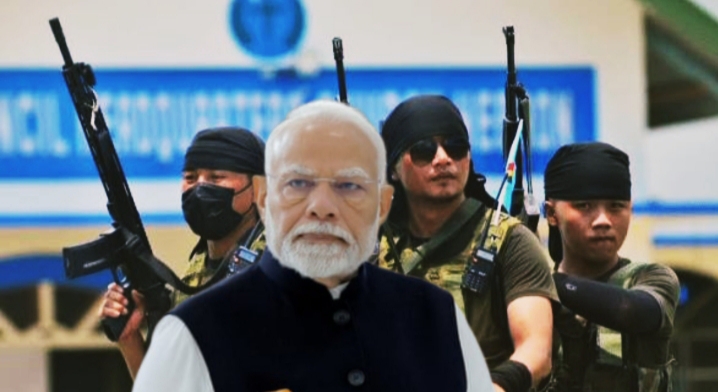
I have watched for 33 years as my people bled. From 1993 till today, 2026, the NSCN-IM has carried out one attack after another on Kuki villages. They do not fight soldiers. They come at night, they burn homes, they shoot at people who cannot fight back. Over 1,100 Kukis have been killed by them. More than 1,000 of them were civilians: children, pregnant women, elderly people, and women who were only trying to protect their families. That is not war. That is slaughter.
What hurts the most is the pattern. Every time the NSCN-IM hears that Kuki armed groups are nearby, they run. They avoid direct confrontation. But the moment they find a village with no defenders, they strike — a church on a Sunday, a home with a mother and child inside. Then they disappear back into the jungle. The NSCN-IM is like a women’s militant organisation — they are afraid to face the Kuki army and only target those who cannot defend themselves.
The attack at Thingkhongjang on July 5 2026 was the same story repeating. They came, they bombed a church during service, they injured civilians, they destroyed property, and they ran. The trauma left behind is not just physical injuries. It is the fear that no village is safe, that no prayer is safe, that no child is safe. This is what we have lived with for over three decades while the world stayed silent.
The way the NSCN-IM has killed Kuki civilians is no different from how ISIS killed Christians in the Middle East: rape, beheading, torture, burning people alive. Villages were wiped out and bodies left in the open. It is the same cruelty, the same targeting of faith and family. For 33 years we have seen it, and the world has looked away.
The NSCN-IM is backed by the Government of India under a ceasefire agreement. Under this agreement they can move and act freely. This is why, from 1993 till today, not a single NSCN-IM cadre or officer has been arrested in connection with the killings and attacks on the Kuki community. A ceasefire that protects the killers and punishes the victims is not peace.
I am saying this not as a politician, not as a leader with a title. I am saying this as a Kuki who has buried too many. The Government of India and the Government of Manipur must stop pretending this is a small problem. You cannot build peace by allowing one group to kill civilians for 33 years and walk away. We demand accountability. We demand security for our villages. And we demand that the killing of our children, our mothers, and our elders finally ends.
Conclusion.
I now appeal to world leaders, including the USA, the UNO, and the UN Human Rights bodies, to immediately intervene and protect the Kuki people. For 33 years we have cried out alone. The killing must stop. The world cannot stay silent while civilians are massacred in their homes and churches. We need protection, we need justice, and we need the international community to stand with us now.