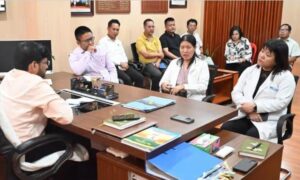
Songpi: With growing public health concerns in the district, Churachandpur Deputy Commissioner Krishna Kumar, IAS, on Monday convened an emergency review meeting to assess the situation arising out of suspected dengue, typhoid, flu-like illnesses and the spread of Hand, Foot and Mouth Disease (HFMD).
The high-level meeting was held at the Mini Secretariat, Tuibong, and was attended by ADC Larbul Fimate, MCS, CEO/ADCC Shokhongam Baite, MCS, Chief Medical Officer Dr. Ph. Khenhong Mate, Medical Superintendent Dr. K. Sania Monica, District Information Officer Chingkeimang, District Immunization Officer, District Surveillance Officer and other senior officials and medical officers.
According to the district administration, the meeting was called after field reports from Primary Health Centres, Community Health Centres and private clinics indicated a rise in fever cases with suspected dengue and typhoid symptoms from various blocks, along with seasonal flu and an increasing number of HFMD cases among young children.
The district administration has appealed to the public not to panic but to remain vigilant, maintain cleanliness in and around houses, boil drinking water, use mosquito nets and repellents, wash hands regularly and immediately visit the nearest Primary Health Centre or District Hospital if symptoms like high fever, rash, mouth sores, blisters or prolonged flu are observed.
Key highlights from the meeting:
– Emergency meeting at Tuibong brought senior district and medical officials together
– Awareness drives will be intensified across villages, schools and colleges
– Departments were told to clear mosquito-breeding sites within 50-100 metres of residential areas
– Dedicated helpline and control cell to be set up in CMO office
Opening the meeting, the Deputy Commissioner sought a block-wise status report from the CMO on the number of suspected and confirmed cases, testing facilities, availability of medicines, and manpower deployment. The CMO informed that surveillance has been strengthened and that most cases are currently under observation with symptomatic treatment being provided.
Taking serious note of the situation, the Deputy Commissioner directed the Chief Medical Officer and Zonal Education Officer to intensify awareness campaigns in villages, schools, colleges and anganwadi centres and strengthen preventive measures against the spread of diseases. He said Information, Education and Communication (IEC) activities should be conducted in local languages including Paite, Hmar and Zou, and focus on early identification of symptoms, personal hygiene, safe drinking water, hand washing and timely referral to health facilities.
The DC said teachers, ASHAs, ANMs, anganwadi workers and village chiefs must be involved to ensure that health messages reach every household. He asked the ZEO to issue instructions to all schools to hold morning health briefings and ensure hand washing facilities and cleanliness in school premises.
Concerned departments including PHED, Rural Development, Municipal Council, ADCC and Forest Department were instructed to ensure elimination of mosquito-breeding sites within a 50–100 metre radius of residential areas to help prevent the spread of mosquito-borne diseases. The DC stressed regular clearing of stagnant water, proper solid waste management, cleaning of drains and water-logged areas, and fogging in vulnerable pockets.
The meeting also reviewed in detail the reported spread of Hand, Foot and Mouth Disease among children, particularly those aged 0–5 years. Health officials said the disease is characterised by fever, skin rashes, inflammation and blisters in the mouth and on hands and feet and is highly contagious among young children. The CMO informed that symptomatic treatment is being provided to affected children at PHCs, CHCs and the District Hospital and that no fatalities have been reported so far in the district.
Parents have been advised not to send symptomatic children to anganwadis, creches or schools for at least 5 to 7 days, to maintain hand hygiene, disinfect toys and utensils used by children, and to avoid close contact. Anganwadi workers have been asked to conduct home visits and screen children with fever and rashes.
Officials also noted a seasonal rise in typhoid cases, linked to water contamination during monsoon and consumption of unsafe drinking water and street food, while stating that the situation is being closely monitored and managed through the existing healthcare system with adequate medicines, ORS, IV fluids and testing kits available at all health facilities.
Later in the evening, the Deputy Commissioner visited District Hospital, Churachandpur, where he interacted with doctors, nurses and other staff and inspected the Medicine Ward, Outpatient Department, Blood Bank, AB-PMJAY/CMHT Help Desk and dialysis unit. He enquired about bed occupancy, medicine stock, staff availability, duty roster and patient feedback. He also interacted with some patients and assured that the administration is taking all necessary steps to prevent any outbreak.
He also instructed healthcare officials to strengthen coordination with other departments for IEC activities and awareness campaigns, particularly in schools, markets and other public places, and to ensure that health advisories are widely disseminated through print, electronic and social media platforms.
The Deputy Commissioner further directed the CMO and Medical Superintendent to issue a dedicated helpline number and establish a dedicated cell at the CMO office to facilitate public assistance, timely information sharing and inter-departmental coordination during the ongoing health concerns.
Officials said the situation is under close watch and regular review meetings will continue until the health situation stabilizes.