By St. Ginth Haokip, Kukiland Express Desk
New Delhi: April 27, 2026
The Union Ministry of Home Affairs has sanctioned over Rs 947 crore for relief and rehabilitation of victims displaced by ethnic violence in Manipur, according to an RTI reply from the state Home Department. The package includes Rs 424.36 crore for operating relief camps set up by the Manipur government and Rs 523 crore for rehabilitating Internally Displaced Persons. The details were disclosed following an RTI application filed by senior Manipur Congress leader Hareshwar Goshwami.
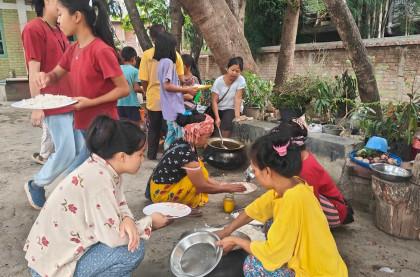
Official data shows the scale of displacement remains severe nearly three years after violence erupted on May 3, 2023. A total of 58,881 people were displaced from their villages between May 3, 2023, and March 30, 2026, the Home Department stated. As of March 10, 2026, 174 relief camps were still operational across the state. To ease congestion, 3,000 pre-fabricated houses have been built by the Manipur Police Housing Corporation Ltd to provide temporary accommodation for IDPs.
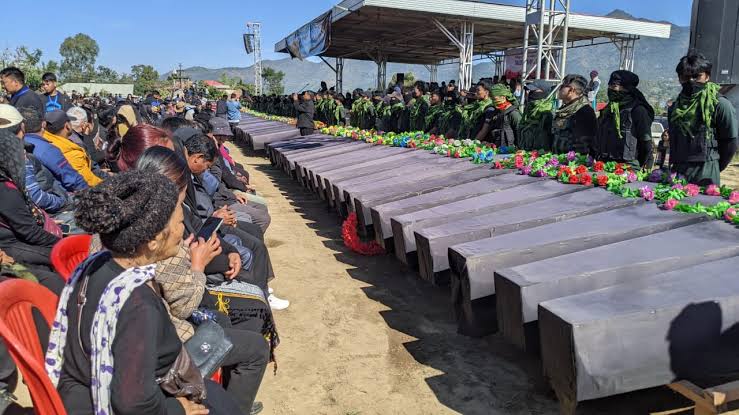
Casualties and property loss remain stark. The department confirmed 217 deaths linked to the violence, based on ex gratia payments disbursed to next of kin. The conflict has also destroyed 7,894 permanent houses and partially damaged 2,646 others since May 3, 2023. The figures reflect widespread destruction of both private homes and government properties across the Imphal Valley and hill districts.
The ethnic violence broke out on May 3, 2023, between the Meitei and Kuki communities after a ‘Tribal Solidarity March’ was organised in the hill districts. The march opposed the Meitei community’s demand for Scheduled Tribe status. Meiteis make up about 53 per cent of Manipur’s population and are concentrated in the five to six districts of the Imphal Valley. Tribal communities, including Nagas and Kukis, constitute around 40 per cent and largely inhabit the state’s eleven hill districts.
At the peak of the crisis, the state government had opened more than 300 relief camps across the Valley and hill regions, sheltering nearly 60,000 displaced men, women, and children. Officials said the number of camps has since dropped to 174 as the situation gradually improved and many families returned to their homes and villages. However, tens of thousands remain in camps and temporary shelters, facing uncertainty over permanent resettlement.
Chief Minister Yumnam Khemchand Singh said expediting the rehabilitation and resettlement of IDPs is now a top priority for the state. He noted that the Centre has extended substantial support for constructing permanent housing, compensating losses of personal belongings and movable assets, and assisting in repairs of partially damaged homes. The dual funding lines — Rs 424.36 crore for camp operations and Rs 523 crore for rehabilitation — are meant to address both immediate shelter and long-term recovery.
Further financial backing is visible in the state’s 2026-27 Budget, which has earmarked Rs 734 crore to accelerate rehabilitation and resettlement efforts for violence-affected families. The allocation is expected to fund permanent housing projects, livelihood restoration, and repair of damaged infrastructure in affected villages. Civil society groups in the hills have urged transparent use of funds and direct delivery to victims, citing past delays in compensation.
While the Centre’s Rs 947 crore sanction marks the largest relief package so far, challenges persist on the ground. Displaced Kuki families in Churachandpur and Kangpokpi continue to demand safe return, neutral security, and reconstruction of over 7,800 destroyed homes before resettlement. With 217 lives lost and nearly 59,000 people uprooted since 2023, observers say the success of the rehabilitation drive will depend on equitable implementation, security guarantees, and restoring trust between communities and the administration.