Kathmandu: The death toll from the Nepal-Tibet glacial flood disaster crossed 1,000 on Tuesday, September 1, 2026, marking one of Nepal’s deadliest climate tragedies. Authorities said rescue has now become a race against time, weather and terrain as families search for loved ones in hospitals and among the debris.
Nepal’s Foreign Ministry confirmed 1,010 deaths in Nepal and 3,916 missing. China reported 16 deaths and 546 missing in Tibet. A total of 11,814 people have been rescued, including 279 hydropower workers pulled from tunnels buried under mud.
The disaster started last week after a glacier collapsed high in the Himalayas. The collapse released rock, ice and meltwater that rushed down valleys, creating flash floods and mudslides along the Trishuli River and Rasuwa district.
Villages like Dhunge, Nuwakot and Betrabati are completely destroyed. Residents said at least 250 homes were swept away in Dhunge alone. Survivors returning to their homes said nothing is usable. One man told Al Jazeera it felt like a tsunami had hit.
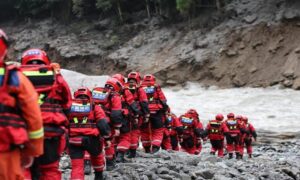
The Nepal Army has deployed 9,200 personnel. Troops are doing foot patrols in forests, hills and river areas, recovering bodies, clearing roads and giving emergency medical help. They are also working to stop the spread of disease in shelter camps.
Drone technology is helping rescuers. Filmmaker and drone pilot Manish Maharjan is working with the Army, using thermal drones to find people stranded on hillsides and in caves. He said they used speakers and played songs to get a response from survivors, which worked in several cases.
Road access is the biggest problem. Heavy rain on Monday night triggered fresh landslides that blocked the main highway to the north. Aid trucks with food, medicine and blankets are stuck. Many northern villages can only be reached by helicopter.
In Kathmandu hospitals, two walls tell the story of the grief. One wall has photos of missing persons put up by families, including relatives of a soldier posted in Rasuwa. The other wall has photos of unidentified bodies. People are moving between the two walls, trying to find their relatives.
Anger is growing among survivors who blame the government for slow action. Officials blame climate change and say China did not share timely data on glacial risk upstream. China denied this, saying it shared hydrological data on time and will send DNA experts, drones, water purification units and more relief supplies on Tuesday. Forensic teams from China and Singapore are bringing DNA kits and freezers.
The threat of a second flood remains. Lakes formed by debris on the Tibetan side are draining, but a new water body upstream in Nepal could burst. The crater left by the glacier collapse is unstable. With heavy rain forecast till Wednesday and $42 million in international aid already received, Foreign Minister Shishir Khanal said Nepal will raise the issue globally as climate justice, not aid, noting Nepal emits only 0.01% of global emissions.