By Kukiland Express Desk
Songpi: April 24, 2026
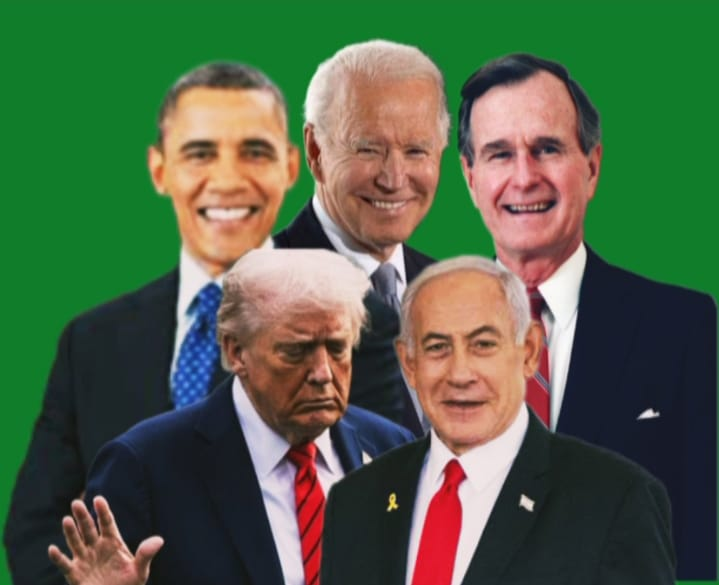
For over two decades, Israeli Prime Minister Benjamin Netanyahu sought U.S. backing for a direct military strike on Iran’s nuclear facilities. Three American presidents in a row rejected the plan. George W. Bush, Barack Obama, and Joe Biden each turned down Israeli requests for joint action, warning of regional escalation. That pattern ended under President Donald Trump, who authorized U.S. participation in attacks on Iranian targets.
Under President Bush, Netanyahu and Israeli defense officials presented strike options in 2007 and 2008 as Iran’s Natanz enrichment plant expanded. Bush refused to approve the operation. The White House concluded that a strike would jeopardize U.S. troops in Iraq and Afghanistan and could ignite a wider war across the Gulf. Instead, the administration opted for covert programs, including cyber operations and sabotage, while denying Israel the bunker-buster bombs and aerial refueling needed for a long-range mission.
The push resumed during the Obama years. Between 2010 and 2012, Netanyahu argued that Iran was approaching a nuclear breakout and that only military force could stop it. Obama rejected the request and chose diplomacy. His administration negotiated the 2015 Joint Comprehensive Plan of Action, trading sanctions relief for caps on Iran’s enrichment and inspections. U.S. officials told Israel that a unilateral strike would collapse the coalition behind sanctions and drag America into another Middle East war.
Tensions over Iran became the defining rift between Netanyahu and Obama. The Israeli leader publicly criticized the JCPOA in a 2015 speech to Congress, saying it paved Iran’s path to a bomb. Obama held firm, maintaining that the deal was the best way to block Iran without military action. No U.S. military support for an Israeli strike was approved during his two terms.
President Biden continued the same policy after 2021. As Iran resumed 60% enrichment and restricted IAEA access, Netanyahu’s government again brought updated war plans to Washington in 2022 and 2023. Biden declined. The administration prioritized reviving the nuclear deal and expanding regional air defense networks with Arab states. Senior U.S. officials warned that an Israeli attack would force American intervention to defend Gulf allies and U.S. bases, and withheld critical munitions and intelligence for a go-it-alone strike.
The U.S. position reversed after Donald Trump returned to office. Following Iranian missile strikes on American bases and the collapse of nuclear talks, Trump approved direct U.S. military involvement in operations against Iran’s nuclear and missile infrastructure. The decision included transferring bunker-buster munitions, providing KC-135 tanker support, and sharing real-time targeting data with the Israeli Air Force.
The strikes marked the first time Washington signed off on the large-scale military plan Netanyahu had pursued since the early 2000s. Where Bush, Obama, and Biden ruled out joint action and sought to restrain Israel, Trump aligned U.S. air power with Israeli objectives. The shift ended 20 years of American refusal and opened a new phase of direct U.S.-Iran military confrontation tied to Israel’s security doctrine.
Edited By: Nengcha Haokip
Copyright ®2026 Kukiland Express – All Rights Reserved.