Moreh: April 17, 2026
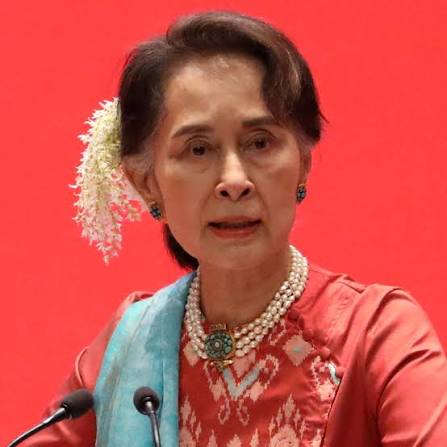
Myanmar’s ousted civilian leader Aung San Suu Kyi, 80, has had her 27-year prison sentence reduced by one-sixth under a new amnesty order issued by President Min Aung Hlaing. The Nobel Peace Prize laureate was convicted in a series of closed-door trials on charges that included incitement, corruption, election fraud, and violations of the state secrets law. Her allies have consistently said the charges were politically motivated and intended to remove her from politics following the military’s seizure of power in February 2021.
The reduction was confirmed by a lawyer familiar with her case, who noted that the order cuts the total term but does not specify whether Suu Kyi will be allowed to serve the remainder under house arrest. No official statement has been released by the military-backed government regarding a change in her detention conditions. Previous partial pardons granted to political detainees in Myanmar have not automatically led to transfers out of prison, leaving her current legal status uncertain.
Suu Kyi has not been seen in public since her marathon trials concluded, and her exact whereabouts remain undisclosed by authorities. During court proceedings, she dismissed the allegations against her as “absurd,” but has had no opportunity to speak publicly since the verdicts were delivered. Access for her legal team has been severely restricted, and international observers have not been permitted to monitor her detention or health.
The 27-year sentence was the cumulative result of more than a dozen separate cases brought against her after the 2021 coup that toppled her democratically elected government. Senior General Min Aung Hlaing led the takeover, ending a decade of political reforms and placing Suu Kyi and other National League for Democracy leaders in detention. Rights groups and multiple Western governments have condemned the trials as lacking due process and transparency, calling them part of a broader effort to dismantle the civilian leadership.
With the one-sixth reduction, Suu Kyi’s effective sentence is shortened by approximately four and a half years. However, the remaining term still amounts to more than two decades in custody. Legal analysts say the amnesty does not overturn any of the convictions, nor does it address calls from the United Nations and ASEAN for her unconditional release. The military government has not indicated whether further reductions are being considered.
Min Aung Hlaing, who was elected president on April 3, 2026, following disputed polls in December 2025 and January 2026, retains authority over amnesty and pardon powers under the military-drafted constitution. The elections were widely boycotted by opposition groups and dismissed by critics as a move to legitimize continued military rule while keeping Suu Kyi and other senior NLD figures out of politics. The vote took place amid ongoing armed conflict across much of the country.
For now, the sentence reduction changes little in practical terms for Suu Kyi, who remains one of Myanmar’s most popular political figures despite her prolonged detention. Until authorities clarify her location and whether she will be moved to house arrest, the amnesty remains a technical adjustment rather than a substantive shift. Her continued imprisonment underscores the military’s control over the political process more than five years after the coup.
Edited by Kukiland Media