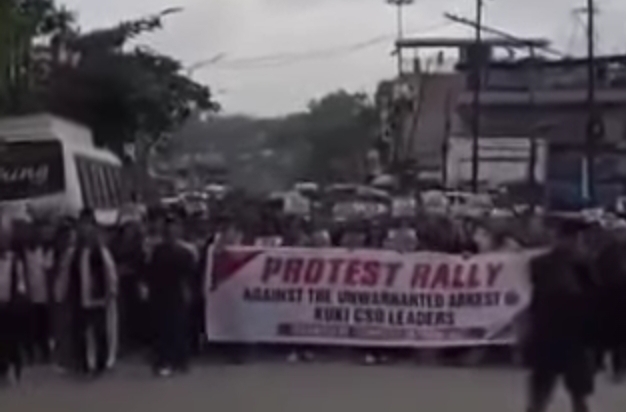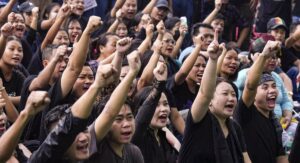
Songpi: In a significant political development in Manipur’s hill areas, Suspension of Operations (SoO) groups and Kuki civil society organizations have resolved to stand united in pursuit of a Union Territory with Legislature. The resolution was adopted at a major public meeting jointly organized by the Kuki National Organisation (KNO) and the United People’s Front (UPF), the two conglomerates of groups under SoO agreement with the Government of India, held on September 21, 2026, in Churachandpur district headquarters.
The meeting was attended by a wide spectrum of community organizations representing different tribal groups within the Kuki community. Those present included representatives of the Kuki Council, which is currently functioning as the apex coordinating body, along with Kuki Inpi Manipur, Vaiphei People’s Council, United Zou Organisation, Kuki Inpi Churachandpur, Mate Tribe Council, Gangte Tribe Union, Any Kuki Tribe, Thadou Inpi, Kuki Chief Association Churachandpur, and their respective youth and women frontal organizations. According to organizers, the meeting was convened to review the ongoing political dialogue with the central government and to forge a common strategy amidst the continuing crisis in Manipur.
After hours of deliberation, the house unanimously reaffirmed its firm and unwavering commitment to the political demand being pursued and spearheaded by the KNO and UPF before the Government of India, namely a Union Territory with Legislature. This demand, which has been the core agenda of the SoO groups since the inception of political talks in 2008, seeks a separate administrative unit under Article 239A of the Constitution, with its own Legislative Assembly, Council of Ministers, and administrative autonomy, on the lines of Puducherry. The resolution stated that such an arrangement is the only viable solution for lasting peace and security for the Kuki people in the present circumstances.
The leaders present at the meeting observed that the events since May 2023 have made it abundantly clear that the Kuki people can no longer feel safe and secure under the existing administrative structure of Manipur. The complete breakdown of inter-community trust, large-scale displacement, and the continued division on ethnic lines have reinforced the long-standing demand for a separate administration. The meeting noted that while the Kuki people have always aspired to live with dignity, protection of land, identity, culture, and resources, the current situation has turned this aspiration into an existential necessity. A Union Territory with Legislature, they argued, would provide constitutional safeguards and administrative independence.
Another major resolution adopted at the meeting was the reaffirmation of steadfast support, cooperation and solidarity with the Kuki Council. The Council, formed with representatives from various civil bodies and community leaders, has been acting as a representative and pressure group to further the collective interests and aspirations of the Kuki people at the national level. The meeting resolved that all participating organizations would work in close coordination with the Council, extend all possible cooperation, and recognize it as the common platform to engage with the Government of India and other stakeholders regarding both humanitarian and political issues.
The SoO groups, KNO and UPF, comprise around 25 groups that have been under a tripartite Suspension of Operations agreement with the Government of India and the Government of Manipur since 2008. The agreement mandates that the groups stay within designated camps and that their cadres do not take up arms, while political dialogue continues for a settlement. Though the state government withdrew from the agreement in early 2023, the central government has continued to uphold it and has maintained dialogue through the Ministry of Home Affairs. The latest public meeting is seen as an attempt to revitalize the talks and present a united front before the next round of negotiations, which is expected to gain momentum after a prolonged period of focus on law and order management.
Political observers in the region believe that the Churachandpur declaration carries significant weight because it brings together not only armed groups but also traditional chiefs, tribe councils, and civil bodies under one roof. By including organizations representing Vaiphei, Zou, Mate, Gangte, Thadou, and other constituent tribes, the meeting sought to demonstrate internal unity and dispel perceptions of divisions within the community regarding the political demand. The joint statement underlined that despite internal tribal diversity, there is a shared history, shared suffering, and a shared political future, and therefore a collective approach is indispensable.
Going forward, the meeting decided to hold similar public consultations in other Kuki-inhabited districts such as Kangpokpi, Tengnoupal, and Pherzawl to build broader consensus. It also appealed to the Government of India to expedite the political dialogue and to acknowledge the genuine aspirations of the Kuki people for a separate Union Territory with Legislature as a democratic, constitutional, and peaceful solution to the protracted crisis in Manipur. The leaders further appealed to the public to maintain peace, discipline, and unity, and reiterated that their movement would remain within the democratic framework and committed to non-violence while pursuing its political goal through dialogue.