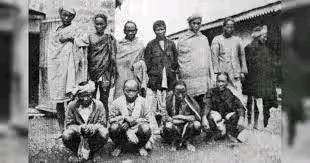
In Manipur’s fractured social landscape, words have become the first line of attack. The Naga community, asserting claims to indigeneity and territory, often brands the Kuki as “nomadic” and “refugees.” The term is not used as anthropological description but as political erasure – an attempt to delegitimize Kuki presence in the hills by portraying them as recent arrivals without historical roots. This narrative overlooks colonial records, oral histories, and documented Kuki settlements that predate the modern state. Yet the label persists because it serves a purpose: to deny land, identity, and belonging.
The Kuki response has been equally sharp, shaped by decades of accumulated hurt. The counter-label “Kacha-Naga,” implying immaturity or incompleteness, is hurled back, along with the same charge of being “refugees.” For many Kukis, this is retaliation in language: a refusal to absorb insult without returning it. It reflects frustration that their own experiences of displacement, from Myanmar and within India, are weaponized against them, while similar histories within Naga communities are glossed over. The mutual exchange of “refugee” as a slur reveals how both groups feel existentially threatened, each fearing the other’s claim will overwrite their own.
This war of words does not exist in a vacuum. It is amplified by contested land, political autonomy demands, and the trauma of ethnic violence. Calling someone “nomadic” questions their right to the soil beneath their feet. Calling someone “Kacha” questions their cultural legitimacy. When both sides use “refugee,” they expose a shared insecurity: that in Manipur’s hierarchy of belonging, there is room for only one version of history. The labels function as both shield and spear – defending one’s own narrative while wounding the other’s.
The tragedy is that these terms entrench division rather than resolve it. Young Nagas and Kukis inherit epithets, not explanations. Public discourse shifts from grievances about governance or development to battles over who arrived first, who is more “native,” and who deserves to stay. In that shift, the possibility of coexistence narrows. Retaliation feels like justice, but it only ensures the cycle repeats, because every insult demands a reply and every reply becomes the next generation’s received truth.
Breaking this cycle requires more than restraint. It demands a reckoning with why these words wound so deeply. Both communities have faced marginalization, displacement, and violence. Both fear erasure. Until there is political space where indigeneity is not a zero-sum contest, “nomadic,” “refugee,” and “Kacha-Naga” will remain loaded terms in Manipur’s lexicon of pain. The real retaliation against history’s injustices would be to refuse to pass these labels on and to speak instead of shared futures, not disputed pasts.
Beyond politics, both communities must confront a deeper contradiction. The Kuki and Naga peoples of Manipur are predominantly Christian. To insult a neighbor as “Kacha,” “nomadic,” or “refugee” stands against the core of that faith. Scripture commands, “Love your neighbor as yourself” – Mark 12:31. When identity is wielded as a weapon against those who share the same pews, hymns, and cross, it is not only political division but spiritual compromise. The pulpit cannot preach reconciliation on Sunday while the street preaches exclusion on Monday.
This division carries a political cost. As long as Nagas oppose Kukis and Kukis oppose Nagas, neither community’s demand from the Manipur state will succeed. Fragmented voices are easily dismissed in Imphal and Delhi. Mutual suspicion ensures that political aspirations – whether for autonomy, separate administration, or territorial recognition – remain trapped in competing memoranda and counter-blockades. A house divided cannot negotiate from strength, and the state apparatus benefits from the stalemate.
Therefore, the path to political success lies in unity. Naga and Kuki unity is the only force capable of altering Manipur’s existing political structure to meet their demands. Shared grievances of land alienation, inadequate representation, and security concerns outweigh the labels that divide them. If the energy spent on retaliation were redirected toward a common front, the political calculus in the state would shift. Without that unity, the insults will continue, but Manipur’s integrity will remain unbroken – and so will the failure to achieve either community’s political goals.
Yet unity without respect is hollow. The foundation for any lasting peace in the region must be the recognition of each community’s boundaries, identity, land, history, and culture. Respect is not concession; it is acknowledgment that no group holds a monopoly on belonging. To respect Naga boundaries is to affirm their historical claims without negating Kuki settlements. To respect Kuki identity is to recognize their cultural distinctiveness without framing it as a threat to Naga heritage. Land disputes cannot be resolved by erasure, and history cannot be rewritten through slurs. Only when every community’s right to self-definition is upheld can dialogue replace retaliation. This is the only way of coexistence and peace in the region – not enforced sameness, but mutual dignity built on acknowledged difference.