Edited by Elvish Haokip | By Kukiland Express Desk
Tamenglong, May 7, 2026
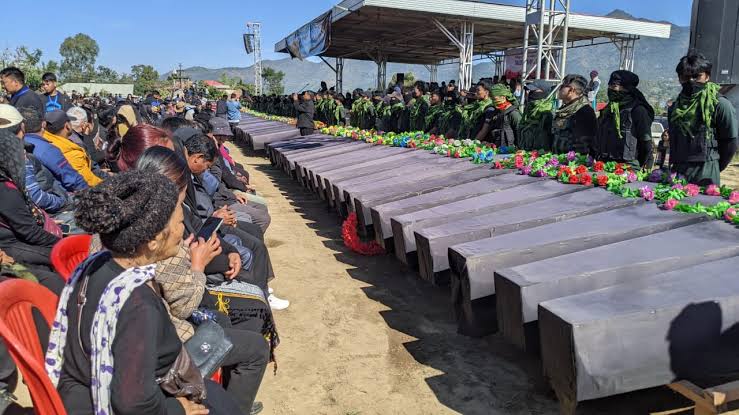
The Zeliangrong United Front (ZUF) and Zeliangrong civil society organisations have categorically rejected attempts to frame the recent violence in Ukhrul district as a broader Naga-Kuki conflict, asserting that the unrest stems from an inter-village dispute triggered by a drunken individual. In a joint meeting held in Tamenglong, the leadership stated that the confrontation originated locally and should not be ethnicised into a wider communal flashpoint. The organisations stressed that the Tangkhul community, while part of the larger Naga fold, does not represent or speak for all Naga groups and therefore cannot draw other Naga communities into the dispute.

“The conflict between the Tangkhul and the Kuki in Ukhrul began with the actions of an individual drunkard and inter-village issues,” the leadership said, warning that it would be irresponsible to allow a localised altercation to be recast as a Naga-Kuki ethnic confrontation. By anchoring their analysis in what they described as the specific, street-level origin of the incident, the ZUF and Zeliangrong CSOs sought to distance their constituencies from narratives that could escalate tensions across the hill districts. The meeting underscored that the incident in Ukhrul does not constitute grounds for ZUF or Zeliangrong organisations to mobilise or take sides.
At the same time, the leadership drew a clear distinction between disengagement from the Ukhrul unrest and the right to defend community territories. While refusing to treat the situation as a collective Naga-Kuki matter, the meeting affirmed that communities retain the duty to protect their own land. It noted that village-level volunteer forces could be established where land encroachment occurs and that such attempts must be met with a firm response. The statement positioned this defensive posture as separate from involvement in disputes that do not directly concern Zeliangrong areas.
The position articulated in Tamenglong signals a refusal to allow the Ukhrul unrest to be leveraged into a wider Naga solidarity narrative against Kuki communities, according to the joint statement. By explicitly rejecting the Naga-Kuki framing and emphasizing the inter-village nature of the dispute, the ZUF and Zeliangrong leadership closed the door on political actors seeking to broaden the conflict, while maintaining that defensive readiness must not become a pretext for entanglement. The stance comes amid heightened sensitivity in Manipur’s hill areas, where inter-community relations remain fragile.