New Delhi: April 17, 226
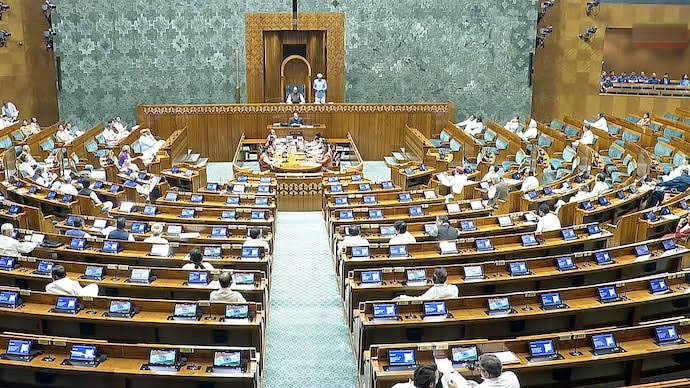
The Modi government on Thursday, April 16, 2026, introduced three separate Delimitation Bills in Parliament aimed at readjusting the number and boundaries of Lok Sabha and State Assembly constituencies across the country. The Bills were tabled in the Lok Sabha by the Union Law and Justice Ministry and are expected to be taken up for debate next week. The move comes ahead of the 2029 general election and follows the completion of the 2025 Census enumeration process, which the government said provides the demographic basis for redrawing constituencies.
The first Bill, titled the Delimitation of Parliamentary and Assembly Constituencies Act, 2026, seeks to empower the Delimitation Commission of India to redraw boundaries for all 543 Lok Sabha seats and corresponding Assembly seats in states. The government stated that the current allocation of seats has been frozen since 1971 based on population figures from that year, despite significant demographic changes over five decades. The Bill proposes using the 2025 Census data as the new basis, with the next delimitation exercise scheduled only after 2051.
The second Bill focuses specifically on Jammu and Kashmir and Ladakh. Titled the Jammu and Kashmir Reorganisation (Amendment) and Delimitation Act, 2026, it seeks to increase the total number of Assembly seats in the Union Territory of Jammu and Kashmir from the current 90 to 98. The increase accounts for population growth and aims to provide greater representation to underrepresented districts in the Jammu region and the Scheduled Tribe communities. The Bill also retains provisions for reservation of seats for Scheduled Castes and Scheduled Tribes as per the 2025 Census proportions.
The third Bill, the North-Eastern States Delimitation Amendment Bill, 2026, addresses long-pending demands from states in the Northeast. It mandates a fresh delimitation exercise for Arunachal Pradesh, Manipur, Meghalaya, Mizoram, Nagaland, and Tripura, where the last delimitation was carried out in 2008 but did not cover all Assembly segments due to security and data concerns. The government said the Bill will ensure parity in representation and correct anomalies where population growth has outpaced the number of constituencies, especially in urban and tribal hill areas.
Union Law Minister Arjun Ram Meghwal, while introducing the Bills, said the exercise is a constitutional requirement under Articles 81, 82, and 170 of the Constitution. He stated that the delimitation freeze imposed by the 42nd Amendment in 1976 was extended until 2026 to encourage population control, and that deadline has now expired. Meghwal added that the new Bills ensure “one vote, one value” by balancing constituencies that currently vary widely in size, with some Lok Sabha seats having over 30 lakh voters while others have under 12 lakh.
The Bills propose reconstituting the Delimitation Commission as a three-member body chaired by a retired Supreme Court judge, with the Chief Election Commissioner and the State Election Commissioner of the concerned state as ex-officio members. The Commission will be empowered to hold public sittings, invite objections, and finalise constituency boundaries without parliamentary approval once notified. The government said this ensures the process remains apolitical and data-driven, based strictly on Census figures and geographic contiguity.
Opposition parties raised immediate objections after the Bills were tabled. The Congress and several regional parties from southern states argued that using the 2025 Census will penalise states that successfully controlled population growth, reducing their proportion of seats in the Lok Sabha compared to northern states with higher growth rates. DMK members said the Bills threaten the federal balance and demanded that the seat freeze be extended until 2051. The government responded that the Constitution does not permit indefinite postponement and that equity requires readjustment.
The Bills also include provisions for reserving seats for women in line with the Nari Shakti Vandan Adhiniyam passed in 2023. Once the new delimitation comes into force, 33 percent of all Lok Sabha and Assembly seats will be earmarked for women on a rotational basis. The Law Minister said this will be the first general election where women’s reservation is implemented alongside redrawn constituencies, marking a major shift in electoral representation. The Election Commission will be tasked with identifying reserved seats after the Commission’s final order.
States are expected to be affected differently under the proposed delimitation. Preliminary estimates circulated by the Law Ministry indicate that Uttar Pradesh, Bihar, Madhya Pradesh, and Rajasthan could see a combined increase of over 30 Lok Sabha seats due to population growth since 1971. Southern states such as Tamil Nadu, Kerala, and Andhra Pradesh may see marginal changes or no increase, while smaller states and Union Territories will gain representation based on minimum thresholds. The government said exact numbers will only be known after the Commission completes its exercise.
The Centre has set a tentative timeline of 18 months for the Delimitation Commission to complete the entire exercise, including public consultations and publication of final orders. This would place completion by late 2027, giving the Election Commission time to update electoral rolls and EVM configurations before the 2029 Lok Sabha polls. The Bills make clear that no state will lose existing seats, but the total number of Lok Sabha seats may increase from 543 to accommodate population changes, subject to a constitutional amendment if required.
Parliament is expected to witness detailed debate on the three Bills next week, with the government seeking passage in the current session. Prime Minister Narendra Modi called the delimitation a “historic step to correct decades of imbalance” and said it would strengthen democracy by ensuring fair representation. If passed, this will be the first full-scale delimitation of parliamentary and assembly constituencies in India since 1973, ending a 53-year freeze on seat allocation.
Edited by Kukiland Media