By Kukiland Express Desk
Songpi: April 24, 2026
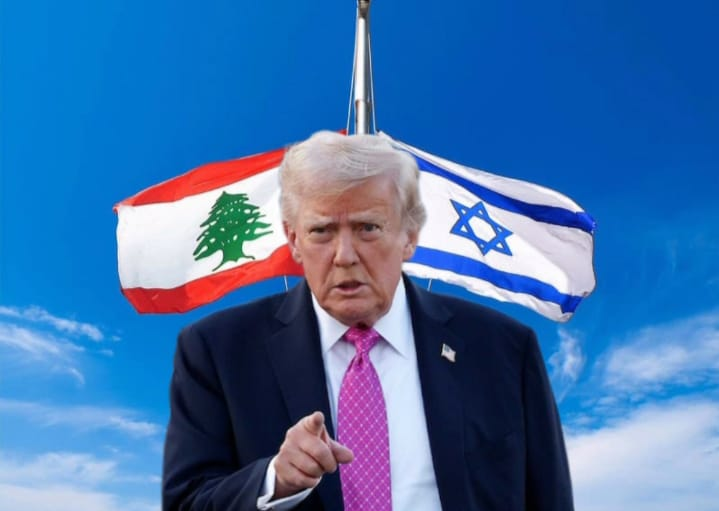
President Donald Trump on Thursday announced that Israel and Lebanon have agreed to extend their ceasefire with Hezbollah by three weeks, following a second round of direct talks between the two countries at the White House. Trump described the meeting between the Israeli and Lebanese ambassadors to the United States as having gone “very well,” signaling cautious diplomatic momentum between neighbors officially at war since 1948.
The extension pushes the truce deadline from Monday to mid-May, building on an initial 10-day ceasefire that took effect last Friday. The agreement marks the most substantive diplomatic contact between Jerusalem and Beirut in three decades, with both sides sending senior envoys to Washington for back-to-back sessions this week. A U.S. official said Trump personally greeted Lebanese Ambassador Nada Hamadeh Moawad and Israeli Ambassador Yechiel Leiter on their arrival for Thursday’s session.
Secretary of State Marco Rubio led the U.S. delegation, joined by State Department Counsellor Michael Needham, Ambassador to Israel Mike Huckabee, and Ambassador to Lebanon Michel Issa. Huckabee, who did not attend the first round last week, joined Thursday’s discussions as Washington seeks to widen the scope of negotiations beyond the immediate truce. The White House has positioned itself as the central mediator between the two states, which have no formal diplomatic ties.
Lebanon’s President Joseph Aoun said Wednesday that Ambassador Hamadeh was instructed to press for the ceasefire extension and to demand an end to Israeli demolitions of homes in towns and villages occupied by Israeli forces since the latest war erupted on March 2. Aoun added that Beirut is preparing for broader negotiations aimed at a permanent cessation of Israeli strikes, the withdrawal of Israeli troops from Lebanese territory, the release of Lebanese prisoners held in Israel, and the deployment of Lebanese Army units along the border.
Israeli Foreign Minister Gideon Saar, speaking during Independence Day remarks to Israel’s diplomatic corps, called on Lebanon to work with Israel to disarm Hezbollah. “We don’t have any serious disagreements with Lebanon. There are a few minor border disputes that can be solved,” Saar said, while describing Lebanon as a “failed state.” He argued that “the obstacle to peace and normalization between the countries is one: Hezbollah,” and said Lebanon could have “a future of sovereignty, independence and freedom from the Iranian occupation.”
The current war began when Hezbollah fired rockets into northern Israel on March 2, two days after Israel and the U.S. launched attacks on Iran. Israel responded with widespread air strikes across Lebanon and a ground invasion that captured dozens of towns and villages along the frontier. The Israeli military now occupies a buffer zone extending up to 10 kilometers into southern Lebanon, which it says is necessary to prevent short-range rocket and anti-tank fire into northern Israeli communities.
Hezbollah has rejected the Washington talks. Wafiq Safa, a senior member of the group’s political council, told The Associated Press that Hezbollah will not abide by any agreements reached in the direct negotiations. The stance underscores the gap between the Lebanese government’s diplomatic track and Hezbollah’s military posture, complicating efforts to convert the temporary truce into a lasting arrangement.
Despite the militant group’s opposition, the direct dialogue is a major shift. Last week’s meeting was the first between Israeli and Lebanese officials since 1993. For decades, communication has been indirect, routed through the United States or UNIFIL, the UN peacekeeping mission in southern Lebanon. Lebanese authorities, who criticized Hezbollah’s March 2 rocket fire in solidarity with Iran, quickly proposed direct talks to avert a wider Israeli ground offensive.
The Lebanese government says it hopes the White House process will pave the way for reconstruction and a full Israeli withdrawal. Since the ceasefire began last Friday, both sides have reported violations. The humanitarian toll remains high, with around 2,300 people killed in Lebanon, including hundreds of women and children, and more than 1 million displaced since March.
Tensions spiked Wednesday when Amal Khalil, a well-known Lebanese journalist covering southern Lebanon, was killed by an Israeli strike. Lebanese health officials said the Israeli military opened fire on an ambulance responding to the scene, delaying recovery efforts. Her body was pulled from rubble hours later. The Israeli military denied deliberately targeting journalists or rescuers, but the incident triggered anger in Lebanon on the eve of the Washington talks.
After a Cabinet meeting Thursday, Lebanese Deputy Prime Minister Tarek Mitri said the government is compiling a report documenting alleged war crimes by Israel and that ministers had discussed joining the International Criminal Court. The legal track runs parallel to the diplomatic one, as Beirut seeks international accountability while engaging in talks.
Aoun said the aim of future negotiations is to “fully” stop Israeli attacks and begin reconstruction in war-hit southern districts. Israel maintains that any lasting deal must include the removal of Hezbollah’s military infrastructure near the border. Saar reiterated that Israel has no territorial claims in Lebanon beyond security needs, framing the buffer zone as temporary.
The initial 10-day ceasefire had been set to expire Monday before Trump’s announcement of the three-week extension. U.S. officials did not specify whether further extensions are being discussed, but described Thursday’s meeting as productive. The State Department said technical teams will continue working-level contacts to monitor compliance and address violations.
For now, the truce offers a fragile pause in a conflict that has redrawn Lebanon’s south and strained Israel’s north. With Hezbollah vowing to ignore the talks and both militaries still deployed in close proximity, the White House faces a narrow path to turn a short-term extension into a durable de-escalation. The next three weeks will test whether direct diplomacy can hold where indirect channels have repeatedly failed.
Edited By: Nengcha Haokip
Copyright ®2026 Kukiland Express – All Rights Reserved.