Silence Is Complicity
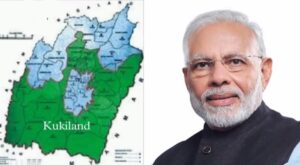
The continued denial of a separate state or Union Territory for the Kuki people by Prime Minister Narendra Modi is not a mere administrative decision. It is a direct affront to the constitutional promise of justice, liberty, and dignity for India’s tribal communities. When a people cry out for protection of their land, identity, and political voice, and the state responds with silence, that silence becomes complicity. The demand for a Kuki administrative unit is rooted in historical marginalization, repeated cycles of violence, and the failure of existing structures to safeguard tribal life. To ignore it is to look down upon the very idea of tribal rights.
Constitutional Guarantees, Not Charity
India’s Constitution recognizes tribal aspirations through the Fifth and Sixth Schedules and through Article 244. These provisions were not charity. They were guarantees, born from the understanding that tribal communities have distinct cultures, territories, and vulnerabilities that require special protection. The Kuki people, indigenous to the hills of Manipur and surrounding regions, have faced displacement, ethnic targeting, and political exclusion for decades. Denying them a constitutional mechanism for self-governance strips these provisions of meaning. It reduces the Constitution to a document of convenience, applied only when it suits the majority.
A Hierarchy of Citizenship
A Union Territory or state is not secession. It is integration with dignity. It is the same framework that created Nagaland, Mizoram, Meghalaya, and more recently Telangana. Each of those was an acknowledgment that administrative reorganization is sometimes the only path to peace and representation. By refusing the Kuki demand while upholding others, the central government creates a hierarchy of citizenship. It tells one community that their blood, their history, and their dead do not merit the same constitutional remedy given to others. That is not federalism. That is discrimination.
Life Without Dignity Under Article 21
The consequences of this denial are already visible. Without constitutional safeguards, Kuki villages remain vulnerable to land alienation, political underrepresentation, and communal violence. The events of 2023 proved that the existing state machinery could not, or would not, protect them. To then block the only democratic solution they seek is to trap a people between violence and voicelessness. Article 21 guarantees the right to life with dignity. What dignity exists when a community is told it must survive without political shelter, without a home it can call its own within the Union?
A Demand Six Decades Old, Paid in Blood
The demand is not new, and the blood is not forgotten. The demand for a Kuki homeland did not begin in 2023. It was formally articulated in the 1960s when Kuki leaders, witnessing the reorganization of states on linguistic and ethnic lines, sought similar constitutional recognition for their people. Memoranda were submitted, peaceful movements were launched, and the Indian state acknowledged the grievance but never acted. Since then, the price of delay has been paid in blood. In the Naga-Kuki clashes of the 1990s, more than 1,100 Kuki civilians were massacred and over 350 villages uprooted. In the ongoing Meitei-Kuki conflict since 2023, another 250 have been killed and thousands displaced. Even the Indian Army, which is sworn to protect every citizen, has been accused of excesses in Kuki areas, with over 100 lives lost in operations and alleged fake encounters carried out by central forces over decades. To deny statehood now is to tell those 1,500 families that their dead do not count.
From INA to Outsiders: The Erasure of History
Kukis fought for India, but India forgets the Kukis. The Kuki people are not strangers to India’s freedom or its Constitution. During the 1940s, more than 100 Kuki men joined the Indian National Army under Netaji Subhas Chandra Bose, fighting the British for the very idea of a free India. Kuki chiefs resisted colonial land grabs in the 1917–1919 Anglo-Kuki War, decades before independence. Yet today, the same people are called outsiders in their own hills. Their ancestral land is being erased through faulty surveys, reserved forest declarations, and eviction drives that violate the Forest Rights Act of 2006. Churches are burned, villages bulldozed, and human rights groups have documented arbitrary arrests, sexual violence, and denial of aid in relief camps. A community that bled for India’s freedom is now being denied the freedom to live securely under the Constitution.
State and Centre: Twin Failures of Protection
Both the Manipur state government and the Government of India have presided over systemic human rights violations against the Kuki community. Since May 2023, the state has been accused of partisan policing, with Kuki homes selectively burned while security forces stood by. Internet bans, economic blockades, and denial of essential supplies to Kuki-majority hill districts were enforced for months, cutting off medicine, food, and communication. The Centre’s imposition of Article 355 without providing real protection, followed by the delayed deployment of central forces and the refusal to enforce a buffer zone, left civilians exposed to sustained attacks. National and international rights bodies have recorded custodial torture, extrajudicial killings, and the destruction of over 200 Kuki churches. These are not lapses. They are patterns of neglect that violate Articles 14, 15, 19, and 21. A government that cannot protect a people’s right to life cannot in good faith deny their right to self-governance.
The Constitution’s Test
Therefore, the refusal to consider a Kuki state or UT is more than a policy failure. It is a moral and constitutional breach. The Indian Constitution does not belong to Delhi alone. It belongs to every tribe, every hill, every citizen who pledges faith in it. If that faith is broken for the Kukis today, it can be broken for any minority tomorrow. Justice for the Kukis is not appeasement. It is the test of whether India’s constitutional promise still holds. A separate state or Union Territory is not a privilege. It is the bare minimum reparation for history, land, and lives already taken.