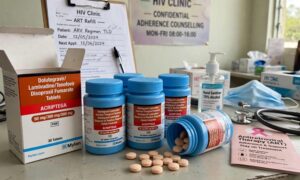
For more than four decades, HIV has been one of the most feared viruses in the world. In the 1980s and 90s, an HIV-positive report was seen as the end of life, surrounded by fear, silence, and discrimination. Families hid the diagnosis and patients had no hope. That history changed completely with the invention of Antiretroviral Therapy. What was once a terminal illness is now a treatable, manageable health condition. This article explains how ART works, why it is so important, and what the future holds.
The Evolution of ART
The first antiretroviral drug, AZT, was approved in 1987, but it was taken alone and failed quickly. The real revolution came in 1996 with Highly Active Antiretroviral Therapy (HAART) – a combination of 3 drugs. Modern ART today is far more advanced. The WHO-recommended first-line regimen is TLD – a single pill containing Tenofovir, Lamivudine, and Dolutegravir. It is more potent, has fewer side effects, and has a high barrier to resistance compared to older regimens.
The Immune Recovery Process
Untreated HIV destroys CD4 T-cells, which are the commanders of the immune system. A healthy person has 500-1500 CD4 cells. Without treatment, it can fall below 200, leading to AIDS. ART halts this destruction. Within the first 3-6 months of effective treatment, viral load drops by more than 90%, and CD4 count starts climbing by 50-100 cells every year. This immune reconstitution protects against deadly opportunistic infections like Tuberculosis, which is the leading cause of death among people with HIV in India.
The Test and Treat Strategy
India adopted the “Test and Treat” policy in 2017. This means anyone testing positive for HIV is eligible to start ART on the same day, no matter their CD4 count. This is critical because starting treatment when CD4 is still high preserves the immune system and prevents damage to the brain, heart, kidneys and other organs caused by chronic inflammation. Early treatment also drastically cuts transmission in the community.
Beyond Survival – Quality of Life and U=U
The goal of ART today is not just survival but quality of life. With viral suppression, people can continue studies, employment, marriage, and have children. The U=U campaign has been endorsed by over 1000 organizations globally including CDC and UNAIDS. For couples where one partner is HIV-positive and undetectable, they can have a natural pregnancy without risk to the partner, though medical advice is needed to prevent mother-to-child transmission, which can be kept below 2% with ART.
The Adherence Challenge and Support System
Success depends entirely on adherence. Because ART is lifelong, factors like stigma, migration, alcohol use, depression, and lack of family support can cause missed doses. That is why ART centres provide not just medicines but also counselling by trained counsellors, peer support from networks of people living with HIV, and linkage to social welfare schemes. New technologies like 99DOTS and missed-call reminders are used to help patients remember daily doses.
The Next Generation of Treatment
The future of ART is moving beyond daily pills. The US FDA has already approved Cabenuva, a long-acting injectable combination of Cabotegravir and Rilpivirine given every 2 months. Clinical trials for 6-monthly injections and even yearly implants are underway. Research is also ongoing for a functional cure using gene editing and broadly neutralizing antibodies. These innovations aim to solve pill fatigue and make life even easier for patients.
Free Access and Ending the Epidemic
Under NACP Phase-V, India provides free ART, viral load testing, and management of co-infections to over 1.7 million people across 700+ ART centres. Manipur remains one of the high-prevalence states, and centres like District Hospital Churachandpur provide confidential care. To end AIDS as a public health threat by 2030, we must ensure everyone knows their status, everyone positive is on treatment, and everyone on treatment becomes undetectable. ART is the backbone of that vision.
HIV in India and What Government is Doing
In India, about 24.67 lakh people are living with HIV. The rate is very low, only 0.20% of adults. India is doing better than many countries. From 2010 to 2024, new HIV cases went down by 49% and deaths due to AIDS went down by 81%. The Government is running NACP Phase -V till 2026 to end AIDS by 2030. Main works are:
- Test and Treat – Start medicine on same day of test
- Free medicine – Free ART given to 18.6 lakh people at 700+ centres
- Viral load test – Free test to check if medicine is working
- Mission Sampark – Finding people who stopped medicine and bringing them back
- No discrimination – Law made in 2017 to protect HIV patients from stigma at job, hospital and school
Now India is testing more than 6.6 crore people every year. The aim is that everyone should know their status, get treatment, and become undetectable.