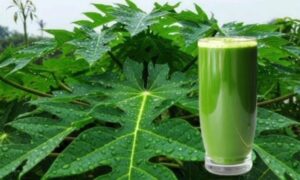
Papaya leaf is widely used as a supportive home remedy during dengue, particularly in India and Southeast Asia. Its most discussed benefit in dengue is its potential to support an increase in platelet count. During dengue infection, platelet levels often fall sharply. Laboratory studies indicate that compounds such as papain, carpaine and flavonoids present in papaya leaf may support bone marrow function and help reduce the destruction of platelets. The leaf is also rich in antioxidants and vitamin C, which may help reduce oxidative stress and support the immune system while the body fights the virus.
How to Make Papaya Leaf Juice Safely at Home for Dengue
Take two to three fresh, medium sized raw papaya leaves and wash them thoroughly with clean water to remove dust and impurities. Remove the thick central stems and chop the leaves into small pieces. Blend the pieces with half a cup of water into a fine paste. Strain the paste through a clean muslin cloth to extract the juice. The juice is extremely bitter, so the traditional practice is to take only two tablespoons, approximately 30 ml, once or twice daily. Do not boil the leaves, as high heat can destroy the beneficial enzymes. Always use fresh leaves, refrigerate the juice for no more than 24 hours, and avoid giving it to pregnant women, lactating mothers and young children without consulting a doctor.
Please note that papaya leaf is not a cure for dengue. It cannot replace proper medical treatment. Dengue can progress rapidly and requires hospital monitoring, adequate hydration and medical supervision. Papaya leaf juice or extract should be considered only as a supportive measure and taken only after consulting your doctor.
Five Other Important Health Benefits of Papaya Leaf
- Supports Digestion and Gut Health: Papaya leaf is naturally rich in digestive enzymes such as papain, chymopapain and protease. These enzymes assist in breaking down proteins, fats and complex carbohydrates into simpler forms that are easier to absorb. This action may help reduce bloating, gas, acidity, indigestion and constipation. It also helps cleanse the colon and supports the growth of beneficial gut bacteria. In many households, a small cup of warm papaya leaf tea after a heavy meal is used to ease stomach heaviness and promote regular bowel movement.
- Supports Liver Health and Natural Detoxification: The leaf contains antioxidants, flavonoids and phytonutrients such as acetogenins that help protect liver cells from damage caused by toxins, alcohol, unhealthy diets and infections. In Ayurveda, it has traditionally been used to support recovery from jaundice and to reduce liver swelling. It may help lower inflammation in the liver and improve bile flow, thereby supporting the liver’s natural detoxification process. Individuals with existing liver conditions should consult a doctor before regular use.
- Helps Manage Blood Sugar Levels: Several laboratory and animal studies suggest that papaya leaf extract may help improve insulin sensitivity and regulate blood glucose levels. Its antioxidants may help protect the insulin producing cells of the pancreas from oxidative damage and may slow down sugar absorption in the intestine, preventing sudden spikes after meals. It is sometimes used as a supportive herb in type 2 diabetes management, but diabetic patients on medication must use it only under medical supervision.
- Supports Healthy Skin and Hair: Rich in vitamins A, C and E and the alkaloid carpaine, papaya leaf helps combat free radicals that contribute to early ageing, wrinkles and hair fall. For skin, its antibacterial and exfoliating properties may help reduce acne, blemishes and fungal infections when applied as a paste. For hair, it is traditionally used to reduce dandruff, relieve itchy scalp, control excess oil and strengthen hair roots, which may improve shine, volume and thickness.
- Anti-inflammatory and Immunity Boosting Properties: Papaya leaf contains anti-inflammatory compounds including flavonoids, alkaloids, papain and vitamin E. These compounds may help reduce chronic inflammation associated with joint pain, arthritis and muscle soreness. By helping to control inflammation, it may also indirectly strengthen the immune system, improving the body’s ability to fight common infections, colds and seasonal illnesses.
Medical Advice: Do Not Rely Solely on Papaya Leaf
Do not attempt to treat dengue at home using only papaya leaf juice. Dengue is a potentially life threatening viral infection that can quickly progress to severe dengue, dengue hemorrhagic fever or dengue shock syndrome. If you have high fever lasting more than two days, severe headache, pain behind the eyes, joint and muscle pain, vomiting, skin rash, bleeding from the nose or gums, or extreme fatigue, seek immediate medical attention at the nearest hospital. Ensure adequate hydration with oral rehydration salts, coconut water and plain water, take complete rest, avoid self medication with ibuprofen or aspirin, and use papaya leaf extract only if your treating doctor approves it. Early diagnosis, regular blood tests and platelet monitoring can save lives.
How to Prevent Dengue in 5 Simple Steps
- Do not let water stagnate: Dengue mosquitoes breed in clean stagnant water. Empty and scrub coolers, flower pots, old tyres, buckets and water tanks at least once a week. Keep water containers covered at all times.
- Use personal protection: Wear full sleeve clothes, use mosquito repellent creams and sprays, and sleep under mosquito nets especially during day time as dengue mosquitoes bite mainly in early morning and before sunset.
- Keep your surroundings clean and sprayed: Keep doors and windows closed with mesh screens, use mosquito coils or liquid vaporisers, and fog your area during dengue season. Ensure proper drainage around your house.
- Protect children and elderly: Children playing outside and elderly people are more vulnerable. Make them wear long clothes, apply child safe repellent, and avoid sending children to play in areas with bushes and stagnant water.
- Stay alert and take early action: If anyone in your family or neighbourhood has fever, avoid mosquito bites to stop further spread, get blood tests early, and inform local health authorities if there is water logging or heavy mosquito breeding near your home.