Tamenglong: The Kuki Civic Action Committee (KCAC) has strongly condemned the alleged burning of Sojamphai Kuki village in Manipur’s Tamenglong district and accused armed groups NSCN-IM and ZUF-K of carrying out systematic attacks against Kuki civilians. In a statement issued on Friday and signed by its information wing, the Committee said the incident at Sojamphai was not isolated but part of a continuing pattern of violence aimed at uprooting Kuki villages located in interior hill areas where security presence is thin and response time is slow.
According to the KCAC, as many as 29 Kuki villages, including Sojamphai, have been allegedly attacked, looted or burnt during the recent resurgence of violence along the Kuki-Naga fault line in Tamenglong, Kangpokpi and adjoining districts. The Committee claimed that the attacks have led to the displacement of more than 2,000 Kuki civilians who have been forced to flee their homes and take shelter in safer villages, forest areas and relief camps in Kangpokpi district. It also alleged that 26 Kuki civilians have been killed since the resurgence of what it described as targeted violence against Kuki villagers. The allegations could not be independently verified by this publication at the time of filing the report.
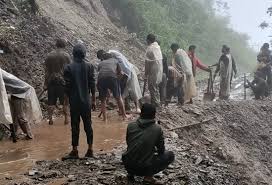
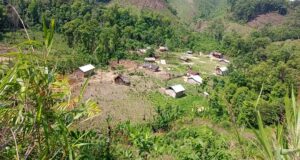
The KCAC stated that Sojamphai, a small Kuki farming village under Tousem Sub-Division, was allegedly set ablaze by heavily armed cadres belonging to NSCN-IM and ZUF-K who entered the village in the early hours and torched houses, granaries and livestock sheds. According to the statement, villagers had already vacated the settlement following earlier threats, and the attackers took advantage of their absence to destroy properties and paddy harvest stored for the year. Photographs shared by villagers purportedly show charred remains of houses and burnt rice barns. The committee said such acts have created deep fear and insecurity among Kuki farmers who depend on jhum cultivation for livelihood and have left hundreds of families without shelter ahead of the harvest season.
Criticising both the Centre and the Manipur government, the KCAC alleged that despite repeated representations, protest memorandums and appeals from Kuki civil bodies, no effective measures have been taken to protect vulnerable Kuki villages in Tamenglong. The Committee said it had submitted multiple memorandums to the Deputy Commissioner, Superintendent of Police and the Governor’s office seeking deployment of central forces in the border villages, but no concrete action was taken. It alleged that the continued inaction has emboldened armed groups to operate with impunity in remote areas and has left Kuki villagers to fend for themselves without adequate security cover.
In a serious allegation, the KCAC claimed that NSCN-IM and ZUF-K could be “covertly sponsored or tolerated” with the alleged objective of weakening the Kuki community and pressuring it to compromise on its political demands. The committee did not provide evidence to substantiate the allegation. It, however, maintained that the pattern of attacks — targeting unarmed civilians, torching of villages, looting of livestock and destruction of granaries — was identical to the tactics used in the 1990s and pointed to a deliberate attempt to intimidate Kuki villages and erase their presence from certain hill tracts. The Committee said the Government of India possesses the administrative capability, military strength and law enforcement machinery to swiftly contain such violence if there is political will.
Putting forward its charter of demands, the KCAC demanded immediate deployment of neutral central security forces in vulnerable Kuki villages in Tamenglong and neighbouring districts, particularly in areas located at the tri-junction of Tamenglong, Kangpokpi and Noney. It sought legal action and registration of FIRs against those responsible for the alleged burning of Sojamphai and other villages, and called for a time-bound investigation by an independent agency. The Committee also demanded comprehensive relief, compensation and rehabilitation for more than 2,000 displaced civilians and families whose homes were allegedly destroyed, including provision of temporary shelter, food, medicines and rebuilding materials before the onset of winter.
The Committee further reiterated its political demand for a Union Territory with legislature for the Kuki people, stating that such an arrangement was necessary for their long-term political security, safety and self-determination. “The Kuki people have endured intolerable suffering while upholding democratic means. The Government of India must act decisively before the situation devolves further,” the KCAC said in its statement. It said that without a separate political administration, Kuki villages in peripheral areas will continue to remain vulnerable to attacks and will not be able to live with dignity and security in their ancestral lands.
Meanwhile, security sources said Assam Rifles and Manipur Police have launched area domination and combing operations in the Tousem area following reports of the Sojamphai incident, but no arrests have been made till filing of this report. Village authorities from neighbouring Kuki villages said many families have already fled to safer locations apprehending further attacks. The Kuki Inpi and other Kuki civil society organisations are expected to hold a joint meeting in Kangpokpi on Saturday to discuss the situation and decide on the next course of action.