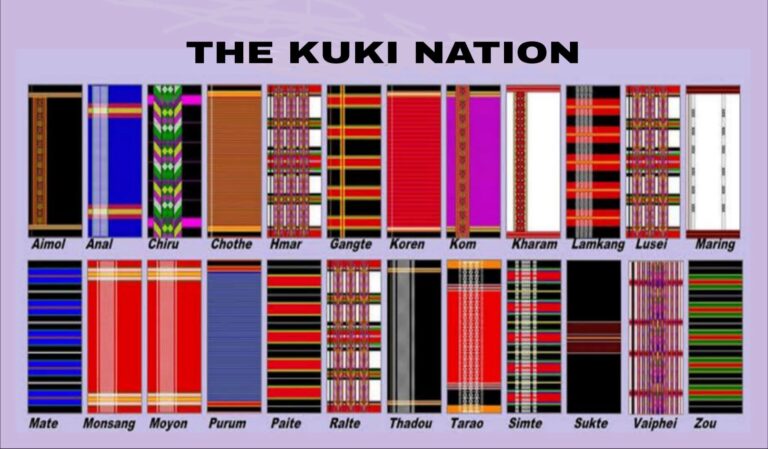
The Koms, Koirengs, Marings, Aimols, Chirus, and Anals are Old Kukis by blood and nature. This is not a matter of opinion or a recent claim, but a truth established by history, kinship, and a shared way of life that has endured for generations. Their identity is rooted in a common origin and a common heritage, and they remain an inseparable part of the larger Kuki family. No present-day politics or pressure can separate their blood, their nature, or their belonging.
These Old Kuki communities share a common identity, linguistic culture, traditions, and striking similarities in the attire they wear. The resemblance in language, customs, festivals, social practices, and traditional dress reflects a deep and enduring cultural bond. These shared traits are not coincidental. They are living evidence of a common origin and a common heritage that continues to unite these communities even today, despite distance, division, and changing circumstances.
The British had recorded, even before the 17th century, that the Aimols, Anals, Bawms, Chins, Chirus, Chothes, Gangtes, Hmars, Koirengs, Koms, Marings, Lusheis (Mizo), Paites, Simtes, Vaipheis, Zous, and others were Kukis. They classified the Aimol, Anal, Chiru, Chothe, Koireng, Kom, Maring and others as Old Kukis. This British record is a historical document of great significance. It cannot be distorted or tarnished to suit anyone’s wish or desire. But remember, long before the British arrived in India, we were already known as Kuki. This is proved in the ancient chronicle Rajmala of the royal king of Tripura and in the Mahabharata, which mentions the Kuki or Kiratas during the 6th-7th century.
Some small tribes, such as the Aimol, Koireng, Maring, Kom, Chiru, and Anal, happened to settle in areas close to the Meiteis and Nagas. Because of their geographical location, they were forcibly compelled to claim themselves as Meiteis or Nagas in press releases or interviews. Such claims do not reflect their true identity. They are the result of pressure and circumstances created by living in close proximity to larger and more dominant neighbouring communities, where survival often demanded outward conformity.
The Nagas of Nagaland are the real Nagas, and one Naga youth from Nagaland has bravely proclaimed the truth. In a video, he boldly asked a Maring man in Manipur, “Are you sure that you are Naga? Since when have you been Nagas? You are old Kuki.” Pointing to the differences in headdress, turban-style cloth, and language, he said their language and culture are more Kuki than Naga. His courageous statement has once again confirmed what history has always recorded.
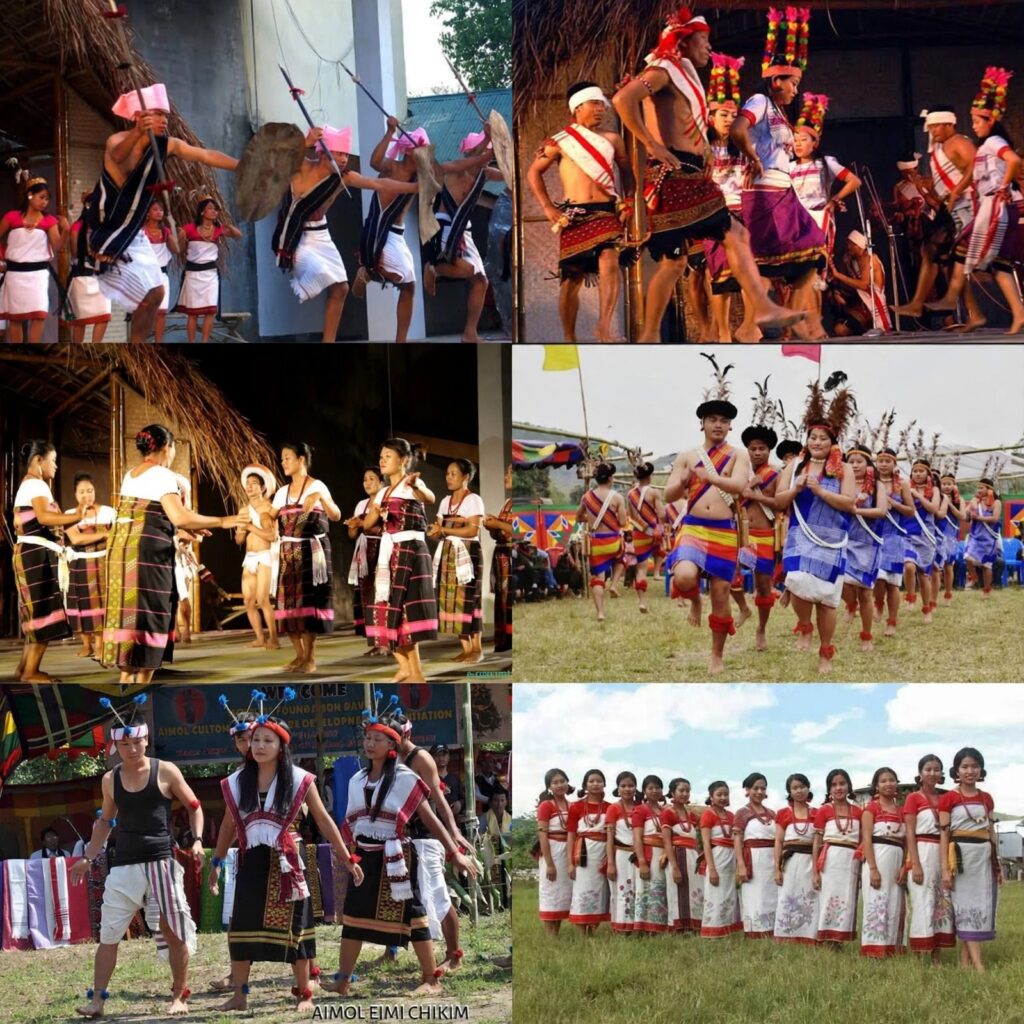
File Photo: Maring, Chiru, Aimol, Kom, Anal, Koireng — Six tribes, one blood, one root. Different names, same Old Kuki identity. Same language, same culture, same tradition, same attire. They are Kukis by blood and nature.
To suppress, ethnically cleanse, or oppress these so-called small tribes is totally against Christianity as well as the Indian Constitution. Christianity teaches love, forgiveness, equality, and respect for all human beings, and the oppression of weaker communities goes directly against those teachings. The Constitution of India likewise guarantees equality, freedom, and dignity to all citizens. No community should be denied its identity, its rights, or its rightful place in society.
Therefore, everyone must treat them with love and respect and coexist with them harmoniously. All communities, large or small, deserve dignity and must be allowed to live according to their own identity and culture. Relations between neighbours must be built on mutual understanding, kindness, and respect for one another’s history and traditions, not on force, fear, or domination.
Peaceful coexistence is the only way forward for all communities living in the region. Love and respect, not force and suppression, must guide relations between neighbours. By embracing unity in diversity, protecting the rights of smaller tribes, and honouring historical truth, all communities can work together for peace, harmony, and a shared future.