Standfirst: Three years after May 3, 2023, the Kuki demand for a separate administration rests on history and law. The 1949 Merger Agreement covered only Manipur’s 650 sq km valley kingdom, not the Kuki hills the British ruled separately. The Kuki deserve a state or union territory.
The Manipur crisis cannot be solved if India ignores one fact: the Kuki hills were never an integral part of the princely state of Manipur that joined India in 1949. Misreading that history means misreading the conflict and its only constitutional solution.
On October 15, 1949, Maharajah Bodh Chandra Singh and V.P. Menon, for the Dominion of India, signed the Manipur Merger Agreement. It merged the princely state of Manipur — then understood as the valley kingdom of roughly 650 sq km — into the Indian Union. It did not include the surrounding hill tracts, the ancestral land of the Kuki people. Under British rule, those hills were administered separately from the valley through political agents, chiefs, and customary systems. The 1949 Agreement left that separation intact.
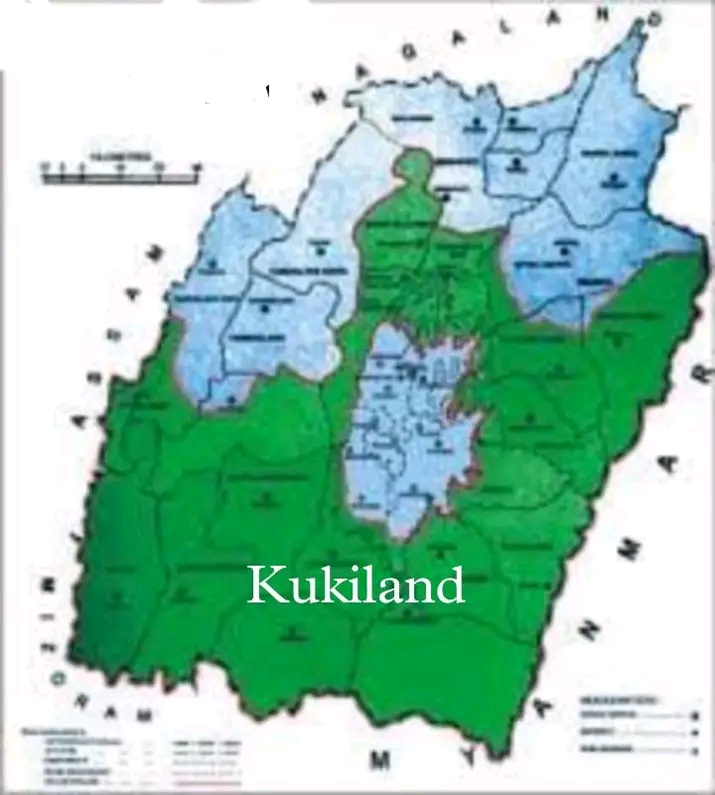
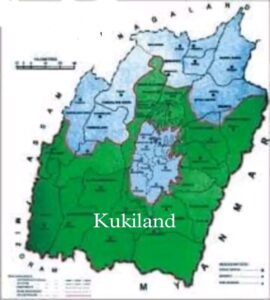
File Photo: Map highlighting Kukiland and the ancestral hill regions claimed by Kuki communities in Manipur.
Colonial Separation, Post-Merger Overreach
British records, maps, and administrative orders treated the Manipur valley and the hill tracts as distinct. The Kuki hills had their own chieftainships, land tenure, and dispute mechanisms. The valley durbar held no jurisdiction there.
After 1949, that separation continued in practice, though not in policy. Successive Manipur state governments extended valley-centric land laws, forest rules, and reservation policies into the hills without consent. For Kukis, this was political erasure by legislation. May 3, 2023, turned that uneasy arrangement into open rupture.
What began as a protest over ST status became systematic targeting of Kukis in Imphal. Churches burned. Villages were razed. Over 60,000 Kukis were displaced. Central forces now man buffer zones between communities that once shared markets and roads.
May 3, 2023: The Social Contract Was Burned
For Kukis, May 3 ended any belief that the Manipur state administration could guarantee life and liberty. Separation is therefore not a slogan. It is the only framework for physical safety, dignity, and governance.
Why Kuki Deserve a State or Union Territory Under the Constitution – The demand is constitutional, not secessionist.
- Article 3: Parliament can form new states and alter boundaries. Telangana, Uttarakhand, Jharkhand, and Chhattisgarh were created this way. Parliament can act when reorganization serves peace and governance. The Kuki hills qualify.
- Sixth Schedule and Article 244A: Though the Sixth Schedule applies to Assam, Meghalaya, Tripura, and Mizoram, and Article 244A to Assam, both embody a principle: tribal homelands with distinct histories may need separate administrative structures. The Kuki hills meet the same test — compact territory, distinct customary law, and collapse of trust in the existing state.
- Articles 14, 21, and 29: Equal protection, right to life, and cultural preservation are not abstract for families in relief camps. When a state is seen as partisan, the Union must secure these rights through alternative governance.

File Photo: Koubru hill inside Kuki ancestral land in Manipur hill regions.
Union Territory With Legislature Is the Workable Model
A UT with legislature, like Puducherry, gives the Centre direct control over law and order while allowing local laws on land, culture, and development. It ends the zero-sum fight over Manipur’s territorial integrity by removing the hills from a government Kukis no longer trust, without drawing a new international border.
It also secures India’s strategic frontier. Central forces already hold the buffer zones. A UT formalizes that role and sends development funds directly, bypassing contested state politics.
The Kuki Demand Will Not Die
Three years of displacement have hardened resolve. Children know their villages only as ash. Families buried kin without ancestral graveyards. Every village council, church, and student body echoes one demand: separate administration. It is not a bargaining chip. It is the condition for return and rebuilding.
Forcing a return to pre-May 2023 arrangements will fail. So long as security, dignity, and rights remain unassured under the current structure, the call for a Kuki state or union territory will continue — in Parliament, in courts, and across generations.
What India Must Do Now
- Acknowledge history: State clearly that the 1949 Merger Agreement did not include the Kuki hills. Facts calm narratives.
- Start the political process: Appoint a commission under Article 3 to examine boundaries, administrative models, and safeguards for all communities.
- Secure the hills: Keep Central forces in buffer zones and hill districts until a settlement is implemented.
- Protect rights: Constitutionally guarantee Kuki land, customary law, and cultural institutions in any new arrangement.
India reorganizes power to preserve peace. That is its strength. The Kuki hills were never part of Manipur’s princely domain. After May 3, 2023, they cannot be part of its political future. A Kuki state or union territory is not secession. It is the Constitution doing what it was designed to do: give every people a home within the Republic.

Fils Photo: hangting hills inside Kuki ancestral land in Manipur.