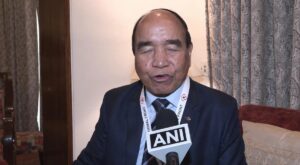
New Delhi: The ethnic crisis in Manipur is one of the most complex and difficult challenges facing the northeast, with divisions running too deep for a quick or superficial solution, former Mizoram Chief Minister Zoramthanga has said. Speaking to media in Delhi on Saturday, the Mizo National Front veteran said the wounds inflicted by more than two years of violence have created a trust deficit that cannot be bridged by merely bringing the conflicting sides together on one platform. He compared the situation to a deep physical wound that requires careful treatment and time, rather than just stitching the wounded parts together. According to him, any attempt at reconciliation that ignores the depth of pain, fear and anger on the ground is unlikely to succeed. His comments come at a time when Manipur continues to remain tense, with sporadic incidents of violence, displacement of thousands of families, and a prolonged demand from various quarters for a political solution that ensures security and dignity for all.
However, Zoramthanga, who has seen Mizoram’s own transition from insurgency to peace, expressed optimism that the Manipur problem is not beyond repair. The former chief minister, who led Mizoram for two terms and was himself part of the Mizo uprising before joining mainstream politics following the historic 1986 Mizo Accord, said there is nothing in the world that cannot be healed with the right approach. He stressed that the path to peace in Manipur lies in dialogue — patient, inclusive and honest dialogue with the people themselves. Instead of imposing a solution from above, the government must listen to what the common people want, what their insecurities are, and what they feel has gone wrong. He said lasting peace can only come when people feel heard and when their legitimate concerns about land, identity, security and representation are addressed through constitutional and democratic means. His experience in Mizoram, which today is considered one of the most peaceful states in the region after decades of insurgency, gives weight to his call for a healing touch.
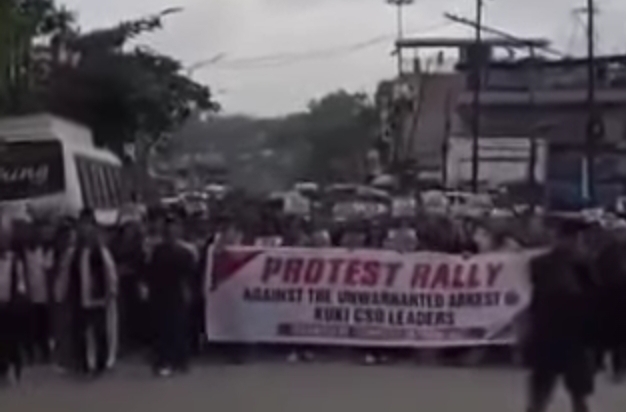
Elaborating on his approach, Zoramthanga said the Government of India will have to take the lead in creating an environment where all affected communities feel safe to speak and to be heard. He suggested a multi-layered consultation process involving community elders, civil society groups, women leaders, youth organisations and elected representatives from both the valley and the hills. The Centre, he said, must act as a neutral and compassionate facilitator, not as an enforcer. He underlined that peace cannot be built on the fear of the gun, but on the assurance of justice. For Manipur, where more than 250 Kuki people have lost their lives and over 60,000 Kuki people have been displaced since violence erupted in May 2023 between the Meitei community and the Kuki tribal groups, this emphasis on dialogue is crucial. The state remains divided on ethnic lines, with buffer zones manned by security forces and many internally displaced persons still living in relief camps, unable to return to their homes. Economic activity has been hit, educational institutions have faced prolonged disruptions, and a sense of alienation has grown among the youth.
Zoramthanga also cautioned against viewing Manipur merely as a law-and-order problem that can be solved through increased security deployment. While acknowledging that maintaining order is important, he said the core issues are political, social and emotional, rooted in history, competing claims over resources, and perceptions of marginalisation. In Mizoram, he recalled, peace became sustainable only after the Centre recognised the political aspirations of the Mizo people and agreed to a framework that respected their identity within the Indian Union. A similar empathetic political approach is needed for Manipur, he indicated, where every community — whether Meitei, Kuki, Naga or others — needs reassurance that their future is secure in the state. He also pointed to the importance of preserving Manipur’s composite culture and inter-community ties that existed for centuries before the recent rupture, noting that communities in the northeast share deep historical and cultural linkages that have been strained by the violence.
The former Mizoram Chief Minister’s remarks carry significance given Mizoram’s role in the ongoing crisis. Mizoram has hosted thousands of displaced people from Manipur and has consistently called for humanitarian assistance and peace. Chief Minister Lalduhoma and various church bodies in Mizoram have also made appeals for reconciliation. Zoramthanga’s own party, the MNF, has been vocal about the need for the Centre to understand the sentiments of the tribal population across the region. His statement that the divisions are deep but healable is being seen as both a warning and a message of hope. It acknowledges the ground reality that trust has collapsed — with many villages now completely segregated and people unwilling to cross into areas dominated by the other community — while also holding out the possibility that dialogue can slowly rebuild what violence has destroyed.
Political observers in the northeast feel that Zoramthanga’s intervention could add momentum to calls for a fresh peace initiative in Manipur. Since the imposition of President’s Rule in the state earlier this year, the central government has been trying to restore normalcy, holding talks with different stakeholders and attempting to ensure free movement on highways and resumption of normal life. However, a comprehensive political roadmap is still awaited. Many civil society organisations have demanded that any solution must include rehabilitation of displaced families with dignity, protection of tribal rights, and a clear political settlement that addresses the demands for autonomy and security from all sides. Zoramthanga’s suggestion of listening to the people directly aligns with these demands and underlines that top-down announcements without grassroots consultations often fail to inspire confidence.
Zoramthanga: https://www.facebook.com/share/r/1DR5zhVTZQ/
In conclusion, while describing the Manipur problem as a very difficult one to solve, Zoramthanga has reiterated his belief that healing is possible if the process is people-centric. He said the Government of India has the resources, the experience and the constitutional tools to bring lasting peace to Manipur, but it must use them with empathy and patience. The divisions may be deep, but as Mizoram’s own history shows, deep wounds can be healed if the healing is done from within, with the participation of those who are hurt. His message from Delhi, therefore, is not just a comment on the current situation but a broader appeal for a compassionate and inclusive approach to conflict resolution in the northeast, where peace has often been achieved not through force, but through dialogue, understanding and respect for diversity.