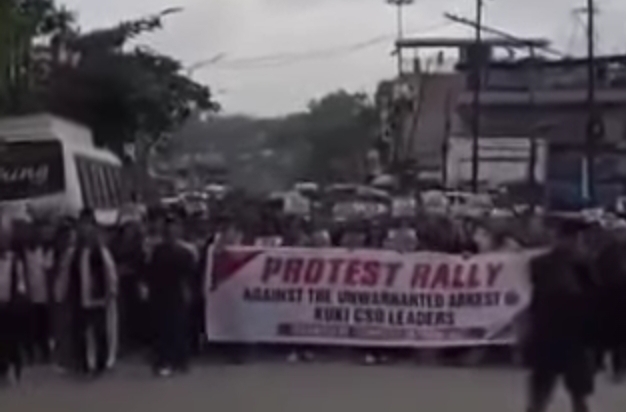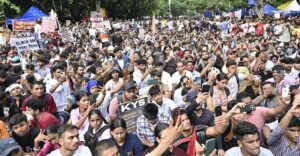
New Delhi: The current wave of protests peaked on *Monday, July 20, 2026, when tens of thousands of supporters of the youth-led Cockroach Janta Party [CJP] held a ‘Sansad Chalo’ march towards Parliament in New Delhi. The movement has been camping at Jantar Mantar for almost a month, but July 20-22 saw the biggest clashes. Protests also spread on July 21-23 to Patna, Jaipur, Bengaluru, Chennai, Surat and other cities.
Reason for Protest:
The immediate trigger was the cancellation of NEET-UG 2026, held on May 3 for nearly 22 lakh students. The exam – the sole gateway to MBBS seats – was cancelled two days later after a paper leak was confirmed. A re-test was held in June. Protesters say repeated leaks, 12 reported student suicides linked to cancellation, and wastage of lakhs of rupees spent on coaching have destroyed faith in the system.
Core Demands:
Protesters are demanding the resignation of Union Education Minister Dharmendra Pradhan, dissolution of the National Testing Agency [NTA], a CBI probe under court supervision, fast-track courts for paper leak cases, and a fixed annual exam calendar.
Injuries – Protesters Side:
According to CJP leaders, about 150 protesters were taken to hospital after Monday’s police action in Delhi. Leaders allege they were struck with lathis and batons, tear gas was fired, and some suffered cracked skulls, fractures and stitches. In Tripura, Youth Congress claimed 12 injured after water cannons and baton-charge near the CM’s residence. In Jaipur, some Congress workers suffered minor injuries.
Injuries – Police Side:
Delhi Police said 118 of its personnel were injured during what it called “violent protests” after protesters allegedly breached barricades, pelted stones and damaged vehicles. Police also said some protesters attacked police late Wednesday night at Jantar Mantar, injuring a few officers.
Police Action:
Delhi Police had imposed prohibitory orders and declared the march unlawful. To disperse crowds, they used tear gas, water cannons and lathi-charge. Four FIRs were registered for arson and violence. In Patna, police sealed the Assembly premises during an AISA ‘Lok Bhavan March’. In Jaipur, police used water cannons at Shaheed Smarak.
Politicians Taking Part – Opposition:
Leader of Opposition Rahul Gandhi and Priyanka Gandhi Vadra visited injured protesters at RML Hospital, met Lok Sabha Speaker Om Birla demanding a Parliament debate, and called PM Modi “anti-youth”. AAP chief Arvind Kejriwal, SP chief Akhilesh Yadav, West Bengal CM Mamata Banerjee, Congress chief Govind Singh Dotasra in Rajasthan, Shashi Tharoor, and SFI leaders were among those who joined or backed the protests. Tharoor called it “death of democracy”.
Politicians – Government Side:
PM Narendra Modi on July 22 told NDA MPs that strong action was taken against those involved in the “ghor paap” of NEET irregularities and promised fast-track courts for paper leak cases. Union Ministers Jitendra Singh and Pralhad Joshi said government is ready for unconditional dialogue.
Parliament Impact:
The Monsoon Session has been paralysed. Parliament saw 13 adjournments as opposition wore black clothes in protest and demanded resignation of Dharmendra Pradhan. Opposition compared police action to Hitler and Jallianwala Bagh, while Delhi Police alleged the protest was infiltrated by “bad elements” who weren’t students.
Current Status:
As of July 23, over 10,000 people were estimated at Jantar Mantar again after rebuilding the camp that police had demolished. CJP founder Abhijeet Dipke called off the Parliament march to avoid more injuries but vowed to continue till Pradhan resigns. Talks between government and CJP have hit deadlock over venue dispute, while both sides trade blame for violence.