Hague: On November 19, 2026, the International Court of Justice delivered a historic verdict: Myanmar committed genocide against the Rohingya. By nine votes to six, the judges in The Hague found the state responsible for genocide during the 2016-2017 clearance operations. It was the first time the World Court had ever found a country guilty of committing genocide. For survivors who fled burning villages, and families still in camps in Bangladesh, it was recognition that what happened was not war, but a crime intended to destroy them as a people.
The case was brought by The Gambia, a West African nation with no direct link to Myanmar or the Rohingya. In November 2019, Gambia used its membership in the 1948 Genocide Convention to file proceedings, arguing that every party has a shared interest in seeing the treaty upheld. That bold strategy allowed a case that might otherwise never have reached the court. Eleven other states later intervened on interpretation, giving the proceedings added weight and ensuring the court’s reading would bind them too.
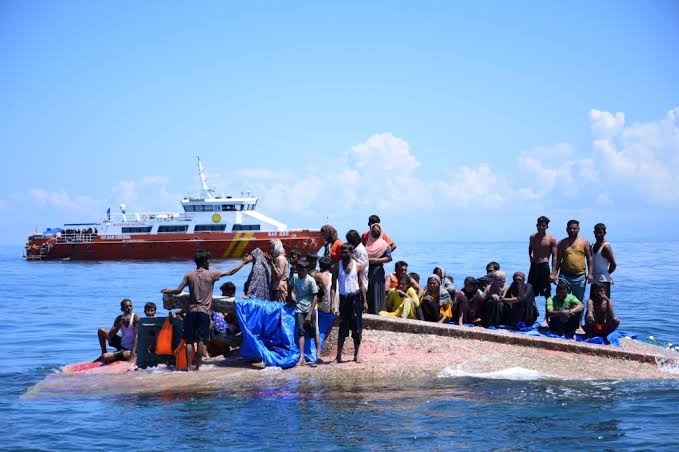
At the centre were operations launched by Myanmar’s security forces in northern Rakhine State in August 2017. Soldiers, police and allied groups swept through Rohingya villages in a campaign of killing, rape and arson. More than 700,000 people fled to Bangladesh within weeks. Entire villages were burned. Survivors described soldiers shooting fleeing civilians, attacking children, and systematically raping women and girls. The court found these were not isolated abuses, but a coordinated pattern by state organs.
To prove genocide, the court had to establish more than atrocities. International law requires specific intent: the intent to destroy, in whole or in part, a national, ethnic, racial or religious group. Myanmar argued its forces were fighting the Arakan Rohingya Salvation Army and restoring security, and that displacement was a consequence of conflict. The judges rejected that. Looking at decades of discrimination, selective targeting, sexual violence, attacks on children and systematic conduct, they concluded genocidal intent was the only reasonable inference.
The court found Myanmar intentionally committed three acts listed in the Convention: killing members of the group, causing serious bodily or mental harm, and imposing measures intended to prevent births. Each act was carried out with intent to destroy a substantial part of the Rohingya population in Myanmar. The court also found Myanmar violated its duties to prevent genocide and punish those responsible. It had failed to enact legislation to give effect to the Convention and to investigate, prosecute and punish genocide in its own courts.
The ruling goes beyond a declaration of wrongdoing. The court ordered Myanmar to cease all ongoing violations, to provide assurances of non-repetition, and to prevent similar crimes in future. It also ruled that The Gambia could seek reparations on behalf of victims, and that Myanmar must provide them. Where possible, reparations must mean restitution, including facilitating safe, voluntary and dignified return and reuniting displaced families. Where restitution is impossible, Myanmar must pay compensation. The judgment is final and cannot be appealed.
For lawyers and victims’ groups worldwide, the judgment sets a major precedent. Its reasoning on how intent can be inferred from patterns, context and targeting, rather than from a single document, will be studied closely. It is expected to influence other pending genocide cases, including the case brought by South Africa against Israel in December 2023. It also reinforces the idea that any state party to the Convention can act as a guardian of the treaty, even without a direct national interest.
The ruling comes at a time of intense pressure on international courts. Before the judgment, United States officials were reported to have sought to influence the ICJ over the legal threshold for genocide. Washington has already sanctioned the International Criminal Court and several of its officials in an effort to shield senior American and Israeli officials from prosecution. Human Rights Watch said the judgment is a reminder of why independent judicial institutions matter. A court that follows evidence despite political pressure is essential if international law is to have meaning.
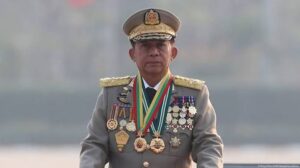
Inside Myanmar, the political reality remains grim. In February 2021, the military led by Senior General Min Aung Hlaing seized power in a coup that overthrew the civilian government of Aung San Suu Kyi. More than five years later, the junta still commits war crimes and crimes against humanity across the country. Min Aung Hlaing installed himself as president after fraudulent elections in December 2025 and January 2026. In Rakhine State, Rohingya civilians have been caught since late 2023 in fighting between the junta and the Arakan Army.
The question now is enforcement. ICJ judgments are legally binding, but the court has no police to enforce them. If a party fails to comply, the other can turn to the UN Security Council, which can recommend or decide measures to give effect to the judgment. In practice, the Council has never used that power. The General Assembly can adopt resolutions calling for compliance and build political pressure. Individual governments can act through diplomacy, sanctions and aid conditions. Whether that can compel a junta that has ignored condemnation for years remains uncertain.
Human Rights Watch welcomed the judgment as a historic milestone. Maria Elena Vignoli, its senior international justice counsel, said it was long-awaited recognition of the suffering the Rohingya have endured. She said it also provides a significant precedent for victims of genocide and other grave crimes worldwide. Her message was direct: Myanmar should swiftly comply and end its oppression. Concerned governments should support the Rohingya, press the junta to comply, promote justice, and ensure any return of refugees is safe, voluntary and dignified.
For the Rohingya, justice will not be complete with a judgment in The Hague. More than a million refugees remain in Bangladesh, many in the camps of Cox’s Bazar, facing restrictions on movement, work and education, and deepening hunger as funding falls. Thousands more remain displaced inside Myanmar under severe restrictions. A legal victory cannot rebuild a burned village or bring back the dead. But for a community long denied citizenship and told it does not belong, a ruling that names what was done as genocide carries profound meaning. The next test is whether the world will act.