The demand from the valley-based Meitei community to implement the National Register of Citizens in Manipur targeting the Kukis has intensified. But is such a demand legally tenable or historically sound? Can a citizenship verification exercise be weaponized to evict the indigenous owners of the hills?
The entire NRC debate is an insult to the more than 50,000 Kuki IDPs who have been rendered homeless and are living as Internally Displaced Persons in their own ancestral land for over three years. While our people are still struggling for food, shelter, education for our children, and dignity in relief camps across Churachandpur, Kangpokpi, Tengnoupal, Chandel, and Mizoram, the Government of India must first answer where our homes are, where our burnt churches are, where our government IDs that were burnt and destroyed by Meitei mobs since 3rd May, 2023 are, and when we will get justice and safe resettlement. Without full provision, compensation, and alternative political arrangement for the IDPs, any discussion on NRC in Manipur is premature, unjust, and unacceptable to the Kuki people.
The Inconvenient Truth: Meitei, Naga and Kuki All Have Refugees and Illegal Immigrants from Myanmar
The selective narrative that only Kukis are refugees from Myanmar is factually false and historically dishonest. The truth is, all three communities – Meitei, Naga and Kuki – have cross-border kinship and have received refugees and illegal immigrants from Myanmar due to decades of conflict, the 1962 exodus, 1988 pro-democracy crackdown, and the 2021 military coup. The Meitei community has Pangal and Meitei kin in Myanmar’s Sagaing Division and Kachin State who regularly cross into Manipur valley. The Naga community openly acknowledges Naga refugees from Myanmar’s Somra Tract, Layshi and Kachin region, sheltered in Ukhrul, Kamjong and Chandel under Naga customary protection. Similarly, Kuki-Chin people fleeing persecution of the Myanmar military junta have sought shelter in Mizoram and Manipur. If NRC is implemented, it must be applied uniformly and scientifically to all three communities without selective targeting.
Over 30,000 Meiteis and 3 to 4 Lakh Nagas Living in Myanmar Proves Illegal Immigration is Not Exclusive to Kuki
The claim that illegal immigration from Myanmar is only a Kuki phenomenon collapses when facts are examined. According to community records and Myanmar census data, there are more than 30,000 Meiteis (locally called Kathe or Ponna) living in Myanmar’s Sagaing Division, Kachin State, Mandalay and Yangon, settled since the 18th century Burmese invasions. Similarly, there are more than 3 to 4 lakh Nagas living in Myanmar’s Somra Tract, Layshi, Lahe, Nanyun and Khamti areas of Sagaing Division. If having kin across the border is made the definition of being a foreigner, then by the same logic, Meiteis and Nagas are also descendants of illegal immigrants. The Kathe Meiteis in Myanmar and Naga refugees from Myanmar regularly cross into Manipur valley and hill districts for trade, marriage, shelter and refuge during the Myanmar civil war. Therefore, the Meitei demand for NRC targeting only Kukis is self-contradictory and discriminatory. If NRC is to be done, it must apply equally to all three communities.
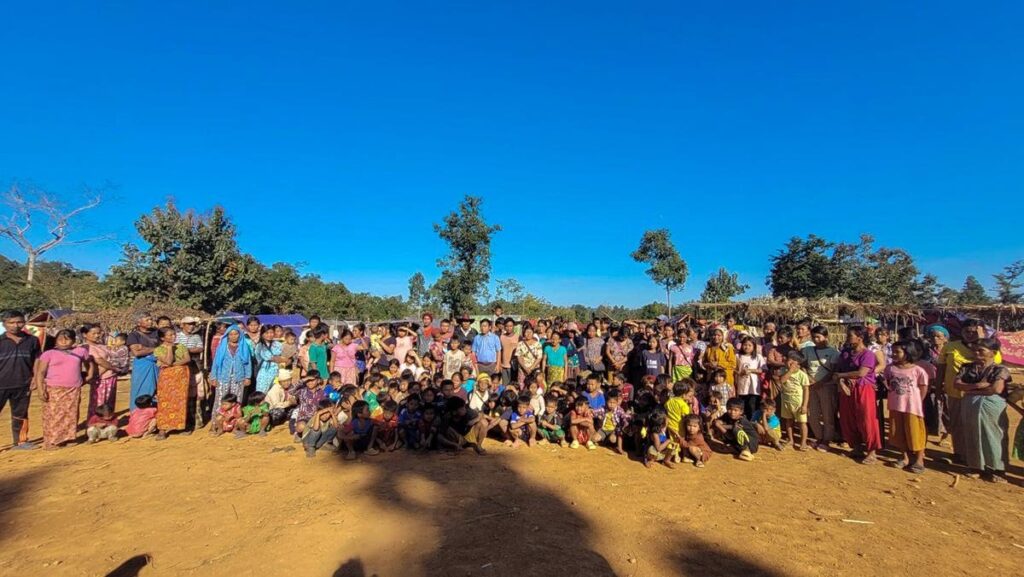
File Photo: Myanmar Naga refugees, including women and children, who fled the conflict in Myanmar and are currently sheltered at Kamjong, Manipur
The Meitei Demand for NRC Cannot Touch Kuki Land and Rights
The proposition that the Meitei community can deport Kukis through the NRC is legally absurd and politically motivated. How can you deport a people who have owned and guarded these hills since time immemorial? The Kukis are not settlers, migrants, or refugees. We are the indigenous owners of the Manipur Hills. Our bond with this land predates the formation of the state, predates every register, and is written in our blood and history. Under the Constitution, NRC is governed by the Citizenship Act, 1955, and the Citizenship Rules, 2003, which deal only with the determination of citizenship. It is not a land ownership document and, under Article 19(5) and Article 300A, it cannot extinguish or transfer ownership of the Kuki Hills to anyone.
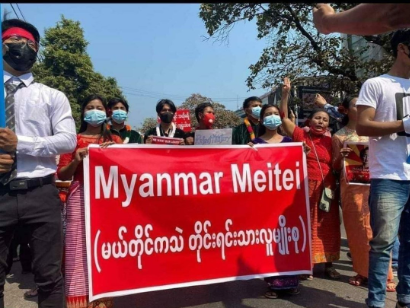
File Photo: Members of the Myanmar Meitei (Kathe) community holding a banner in Myanmar, proving the existence of over 30,000 Meiteis in Sagaing and Kachin region. If cross-border kinship is the criteria for NRC, Meiteis also have refugees from Myanmar.
The Manipur Hills Were Never Part of the Meitei Kingdom – The Merger Agreement Proves It
The fundamental legal truth remains that the Manipur Hills were never part of the Meitei kingdom. The conclusive proof lies in the Manipur Merger Agreement of 1949. The agreement was signed by the Maharaja for the valley state alone, which constituted his kingdom. The Hills were never his to give away, as they were administered directly by independent Chiefs under the British Political Agent. A settled legal principle under the law of treaties is clear: nemo dat quod non habet, meaning no one can transfer what he does not possess. The British administration always maintained this distinction under the Government of India Act, 1935, treating the valley as a princely state and the hills as an Excluded Area under Section 91 and Section 92 of the Act.
Meiteis Have No Ancestral Land Rights in the Hills
A Meitei cannot purchase land in the hills, widely recognized as Kuki Hills, nor can a tribal be evicted by valley law. The Meitei community has no history of chieftainship, customary tenure, or ancestral ownership in these hills. Our system of chieftainship, our customary laws, and our traditional village boundaries serve as the authentic revenue records of the hills. The valley belongs to the Meiteis, the hills belong to the Kukis. For centuries, Meitei kings neither ruled our hills nor collected taxes from our Chiefs. Any claim of ownership today is therefore devoid of historical and legal foundation.
Rajmala and Mahabharata Affirm Kuki Presence Since the 6th Century
Our indigeneity is enshrined in ancient chronicles. The Tripura Rajmala and references in the Mahabharata document the presence of Kirata and Kuki tribes in the Chittagong Hill Tracts, the northeastern frontier, and the western regions of Myanmar since the sixth to seventh century. We were acknowledged as the Kings of the Hills and the sentinels of the eastern frontier. While valley kingdoms rose and fell, our ancestors exercised absolute sovereignty over these mountain ranges.
The Anglo-Kuki War and the 1869 Revolt Are Our Land Titles
The Great Kuki Revolt of 1869 to 1870 and the epic Anglo-Kuki War of 1917 to 1919 stand as declarations of our sovereignty. An immigrant does not wage a two-year war against the mightiest empire on earth to defend a foreign land. Only a king fights for his kingdom. These wars are our land deeds, inscribed in gunpowder and preserved in British archives.
We Possess Historical Protection Recognized by India Under Article 342
We enjoy historical protection that no NRC can nullify. The Kukis are recognized as a Scheduled Tribe by the Government of India under Article 342 of the Constitution of India, a constitutional status conferred only upon the aboriginal peoples of the country. The Government of India has included Kuki, Thadou, Hmar, Paite, Vaiphei, Zou, and other sub-tribes in the Scheduled Tribes list through the Constitution Scheduled Tribes Order, 1950, and the Scheduled Castes and Scheduled Tribes Orders Act, 1956, which in itself constitutes conclusive proof of citizenship and indigenous status that long predates any NRC.
We Possess Strong Constitutional Protection for Our Land Rights Under Article 371C
Our land rights enjoy the strongest protection under Indian law. Article 371C of the Constitution provides special provisions for the Hill Areas of Manipur and mandates the constitution of the Hill Areas Committee to safeguard tribal interests. Furthermore, the Manipur Land Revenue and Land Reforms Act, 1960, under Section 2(2), is explicitly not applicable to the hill areas. Our land is governed by customary law protected under Article 13(3)(a).

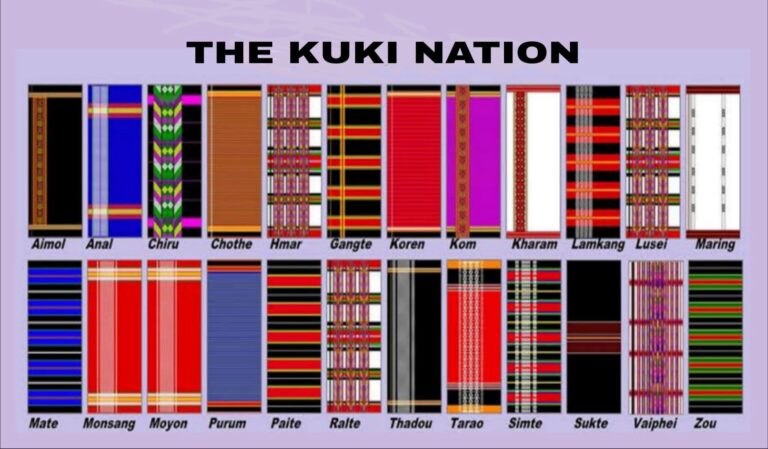
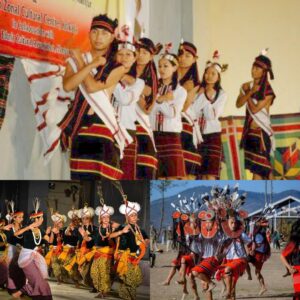
File Photo: Kuki women pose in traditional attire, showcasing the vibrant cultural heritage of the Kuki community.
We Possess Our Own Strong Force to Defend Our Land
Beyond constitutional safeguards, we have our own physical protection. We have the strong, united, and disciplined force of our Village Volunteers. They are sons of the soil, vigilant over every village, hill, and valley in Kukiland.
Any NRC Will Only Reaffirm That We Are Indigenous
Any fair and scientific implementation of the NRC will only reaffirm what history already knows. It will establish that the Kukis are indigenous citizens of India endowed with full rights under Article 5, Article 14, and Article 21. If the NRC is conducted honestly, relying on pre-1947 records such as Anglo-Kuki War documents, colonial census reports, and the genealogies of our Chiefs, it will conclusively prove who the true indigenous inhabitants of the hills are.
Rehabilitation Before Verification: Justice for IDPs is Non-Negotiable
Therefore, before the State utters the word NRC, it must first deliver justice to the Kuki IDPs. Rehabilitation is not charity, it is a constitutional obligation under Article 21. The government must ensure safe return to ancestral homes in Imphal valley, full compensation for burnt houses, churches and properties, restoration of all burnt documents, and punishment for perpetrators of the May 3, 2023 ethnic cleansing. Until the last Kuki IDP is resettled with dignity and a separate political administration is granted for lasting security, any talk of NRC is nothing but an attempt to divert attention from state-sponsored displacement.
Conclusion: We Are Sons of the Soil, We Will Never Be Deported
In conclusion, the Meitei aspiration of deporting Kukis through the NRC will never materialize. You cannot deport the sons of the soil from their own ancestral hills. We have historical recognition under Article 342, we have constitutional protection for our land rights under Article 371C, Article 19(5), Article 244, and Article 300A, and we have the unwavering strength of our Village Volunteers to defend us against any forced invasion.