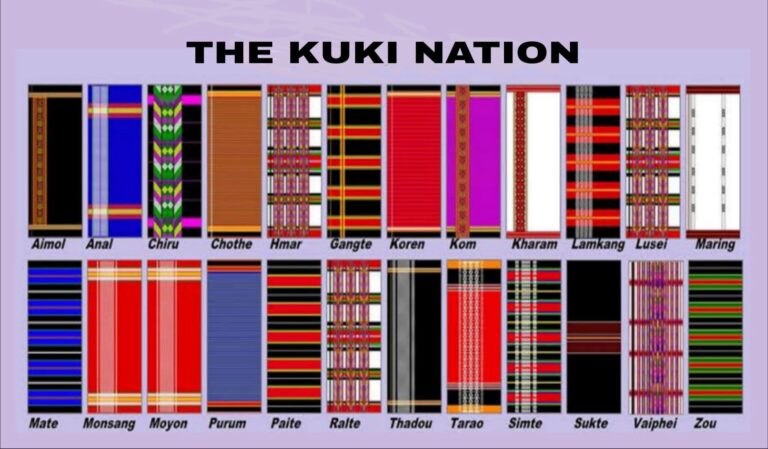

In times of crisis, the media’s greatest responsibility is the pursuit of truth. As violence and political turmoil continue to grip Manipur, a dangerous parallel war is being waged, not with guns, but with false narratives. We urgently appeal to all national, regional, and international media outlets to refrain from publishing incident-related narratives spread by Meitei and Naga actors without rigorous prior investigation. Today, disinformation is being weaponized to destroy the reputation and image of the Kuki people, and without strict editorial scrutiny, the media risks becoming an unwitting accomplice to this malicious design.
Certain sections of the Meitei and Naga communities are actively propagating and generating a web of false narratives. These fabrications are not random; they are a systematic attempt to paint the Kukis as aggressors while obscuring the historical and ongoing injustices faced by our community. The Kuki people are, by nature, a peace-loving community. Since time immemorial, we have maintained a steadfast regard for humanity, compassion, and moral values. Our culture is not one of unprovoked aggression, but of defending our ancestral rights with honour. To portray us otherwise is a gross distortion of history and identity.
A particularly sinister ploy is currently being executed by the NSCN-IM and its proxy group, the ZUF (Kamson faction). These groups are deliberately seeking to drag the Zeliangrong community into a war against the Kukis. Their modus operandi is as calculated as it is diabolical: they kill their own people within Zeliangrong areas and then blame the Kukis for the murders. They have also targeted and murdered Kukis living in and around Zeliangrong territory, solely to trigger a spark of communal confrontation between the Kuki and Zeliangrong communities.
However, their malicious intent has not gone unnoticed. The Kuki people, alongside many wise and discerning Zeliangrong leaders, are fully aware of this ploy. Recognizing the trap set to divide us, we have exercised maximum restraint. We refuse to be drawn into a needless conflict that these external forces are desperately attempting to manufacture, understanding that the true enemy is neither Kuki nor Zeliangrong, but those who seek to sow discord for their territorial ambitions.
A recent example of this fabricated atrocity is the attack on Loibol village, where innocent people were killed. In a shocking display of dishonesty, a narrative was spun claiming these slain individuals were victims of a gunfight between the KNF-P and KLA. This allegation is as ridiculous as it is shameful. No such internal conflict exists or has occurred. This is merely a convenient and desperate lie, invented by those who slaughtered innocents to cover their tracks and frame the Kukis for a crime we did not commit.
This campaign of slander serves a greater, longstanding agenda. The ultimate, unchanging policy of the NSCN-IM is the complete erasure of the Kuki people from the face of the earth, driven by a voracious appetite to overtake Kuki ancestral lands. The historical truth, which they seek to violently suppress, is that the entire hill region of Manipur belongs to the Kuki people. To fulfil their expansionist dream, the NSCN-IM and certain Tangkhul elements have utilized every source of power and might at their disposal to occupy Kukiland and systematically dismantle our presence.
The Role of Responsible Journalism
In conflict zones, unverified reporting costs lives. When media platforms amplify single-source claims, especially from actors with vested territorial or political interests, they do not merely report conflict — they escalate it. The Kuki Human Rights Council has documented multiple instances since May 2023 where premature reporting on alleged “Kuki aggression” was later contradicted by police records, eyewitness testimony, and independent fact-finding.
We therefore call upon editors, journalists, and news agencies to implement a three-point verification standard before publishing incident reports from Manipur:
- Corroborate with primary sources: Seek confirmation from district administration, local police, and civil society from all communities involved.
- Disclose attribution: Clearly state when a claim originates from one ethnic group or armed group with known stakes in the conflict.
- Allow right of reply: Contact Kuki civil society organizations for comment when allegations are made against the community.
We call upon the global community and the conscience of the press: see through these manufactured narratives. Verify every claim before it is published. To do otherwise is to embolden those who traffic in bloodshed and lies, accelerating a tragedy that the Kuki people, as peace-lovers and possessors of a divine moral code, are trying desperately to avoid.