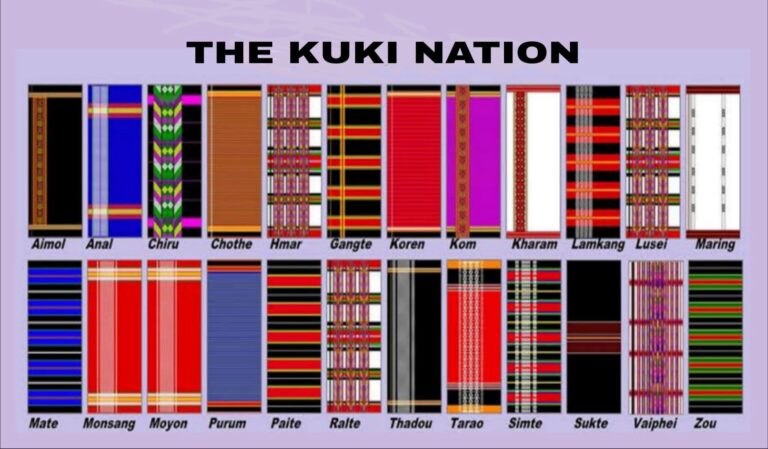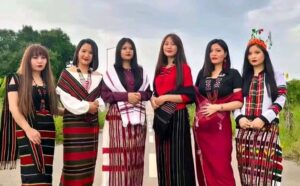
The Kuki community in Manipur has been subjected to a deliberate and calculated policy of division and fragmentation, orchestrated by both the Indian government and the Manipur state government. This policy finds its roots in the 1956 tribe modification, which arbitrarily dissected the Kuki community into over 15 tribes, creating spurious distinctions and sowing the seeds of discord.
The 1956 tribe modification marked a watershed moment in the annals of the Kuki community, as it spawned divisions even along clan lines, pitting one group against another. Clans like Haokip, Guite, Mate, Thadou, Kipgen, Lunkim, and Lhungdim, among others, which shared similar dialects and cultural practices, were suddenly designated as separate tribes, precipitating a fragmentation of the community and undermining their ability to present a united front.
The Manipur government has assiduously perpetuated this policy of division, leveraging the 1956 tribe modification as a tool to maintain the Kuki community in a state of weakness and disunity. By recognizing multiple tribes, including clans like Thadou and Mate, the government has created a system of competing interests, where one group’s gain is perceived as a loss for another, exacerbating the lack of unity and cohesion among the Kuki people.
The emergence of the Zomi identities in the 1990s, linked to Burmese immigration and the Zo (Mizo) community, has introduced a new variable into the equation, further fragmenting the Kuki community. The government’s tacit support for these groups has intensified the problem, generating a sense of unease and mistrust among the Kuki people.
To counter this, the Kuki community must acknowledge the government’s divide and rule policy and unite to present a united front against oppression. They must insist on recognition as a single entity, rather than being fragmented into multiple tribes. Unity and solidarity are indispensable for the Kukis to safeguard their rights and interests.
“The Kuki community’s political identity and land rights are inextricably linked to their status as Kukis, and without it, there can be no separate administration. It is imperative that the Kukis unite and assert their rights.”